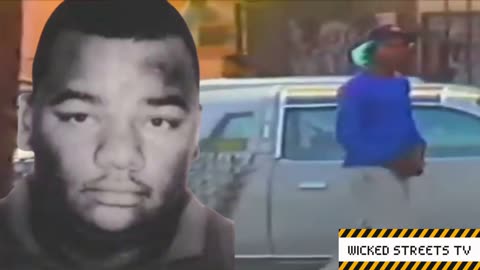
That's what keeps the channel moving so I can keep dropping these videos for y'all. Every single beat you hearing in these videos and shorts, that's all me, produced by yours truly. So anybody interested in any of the production you hearing on this channel? Hit us up at evilstreetsmedia at gmail.com. That goes for anybody trying to promote they music or business too. Get at me and we can work something out. We started throwing these episodes up on Spotify podcasts too. So anybody can just listen on whatever device while you driving or out here trapping. Link sitting right there in the description. I'm getting a Patreon going too. Where I'll be dropping extended videos with deeper dives into all this. So stay on the lookout for that. Also anybody just trying to support the channel in general, you can send a dollar or a million dollars to our cash app evil streets tv. Every single cent that gets donated goes right back into the channel. Make sure to drop a comment if you do so I can shout you out on the next video. Alright I kept y'all waiting long enough let's get into this gangster shit. Enjoy the show. South Central Los Angeles, the birthplace of gangster rap and a cultural landmark for hood film classics has always been a breeding ground for stories about survival, struggle and power. It's where the bloods and the crips was born. Two street organizations that left a permanent mark on society for over forty years. In the 1980s when that crack cocaine epidemic tore through South Central, Watts, Compton and the surrounding neighborhoods the streets turned into a war zone and drug kingpins rose to power damn near overnight. While most people connect this era with the infamous freeway Rick Ross. Another dealer Brian Waterhead Bo Bennett arguably had just as much if not more impact on the game. Waterhead Bo's name holds serious weight in South Central lore and his legacy is connected to the wild rise of crack cocaine and its destructive hold on the community. South Central Los Angeles became a symbol of hope for many African-American families during the 1950s and 60s. Pulled in by the promise of affordable housing and year-round sunshine, families running from the oppressive Jim Crow South found refuge in California during the Great Migration. This historic movement saw waves of black Americans leaving the South searching for better opportunities in the North and West. Brian Waterhead Bo Bennett was one of those individuals whose family was looking for a fresh start. Originally from Detroit, Michigan Bo relocated to South Central Los Angeles as a young kid with his family. His parents, many Finley and Ernestie Bennett bought a crib in the area setting up a stable foundation for their growing household. His home was shared with four older siblings from his mother's previous marriage, making for a packed family dynamic. Despite the sunny promise of California, Bo dealt with major challenges in his early years. Struggling with all kinds of health problems including asthma, eczema and severe allergies, his childhood was filled with physical discomfort. Being naturally heavy set, Bo's weight triggered his asthmatic problems which pushed him toward athletics. Brian Waterhead Bo Bennett's early life was a mixture of privilege and pain. He got extra attention because of his health issues earning him the title of favorite in the family. It came at a price to his siblings. His father's strict and often abusive disciplinary methods left a permanent scar on the household, especially on Bo's half siblings who took the worst of the violence. Bo's childhood home on West Florence Avenue was positioned in gang territory. An environment where danger was around every corner. His older brothers were constantly in and out of legal trouble, adding to the chaos that Bo dealt with daily. Yet thanks to the Los Angeles Unified School District's desegregation efforts, Bo was given an opportunity many kids in his neighborhood didn't get, the chance to attend school in a more comfortable area. He was bused to James Monroe High School in Sepulveda, a Los Angeles suburb far away from the struggles of South Central. At Monroe, Bo was exposed to a different side of Los Angeles, a world that stood in sharp contrast with the violence and instability of his home life. The experience planted the seeds of ambition in him, lighting up his desire to chase the American dream. Despite having the potential to do well academically, Bo didn't put much focus on his studies. Instead he turned his attention to sports, playing basketball, football, and baseball to manage his health and channel his energy. Standing at 5.11 and weighing 260 pounds, Bo was an intimidating presence on the field and court. However, when he came back home each day, he was thrown right back into a chaotic environment. His parents constant fighting and his brothers' run-ins with the law created a stark contrast to the stability he witnessed in Sepulveda. This exposure to two different worlds, one of chaos and one of opportunity, sparked a hunger in Bo to rise above his circumstances. Bo's exposure to a more stable and comfortable environment, through the Burn Schneiders, gave him a glimpse of a life far removed from the turmoil of South Central Los Angeles. At James Monroe High School, he formed bonds with white classmates going to their parties and even staying over at their cribs. This connection eventually led Bert and Gloria Burn Schneider, a kind-hearted couple from the San Fernando Valley, to take him in after the tragic loss of one of Bo's childhood friends. The Burn Schneider saw potential in Bo and appreciated his company, giving him a refuge from the dangers of his old neighborhood. However, despite the stability the Burn Schneider provided, Bo struggled academically. He graduated in 1982, ranking dead last in his class with a GPA of 1.26. After that year, tragedy hit again when his father Ernest Bennett passed away in November. The loss of his father added new pressure on Bo to contribute financially. With his eldest brother blowing earnings from his painting job on liquor, women, and flashy cars, Bo felt the weight of stepping up to support his family. He initially worked for the Burn Schneider Brothers electrical contracting firm, but bounced in 1983 to take a job with a liquor distributor. He later worked as a boxboy at a supermarket in Sepulveda, before landing his final job in the workforce as a tree trimmer. In 1983, Bo Bennett's life took a major turn when he crossed paths with Mario Villabono Alvarado, a lieutenant from the notorious Cali Cartel. Mario had been sent by the cartel to start operations in the black community of Los Angeles, a mission that proved difficult at the time. The Cali Cartel had mainly focused on wealthy clients and had struggled to break into the drug markets in lower income areas. They needed somebody who was familiar with the community and could be trusted by locals, somebody who could move product quickly and quietly. Mario, who had come to the US as a student in 1981, was tasked with this delicate assignment. While he was in the US, Mario kept ties with his uncle, a high-ranking member of the Cali Cartel, who went by the name Oscar. Mario had already built a name for himself in the drug trade, but now he was ready to expand the cartel's operations in the US. He had spotted potential in Bo when they met at a car wash. After noticing Bo's flashy car, Mario approached him with an offer to buy it and the two got into a conversation. This interaction marked the beginning of their partnership in the drug trade. Mario was clear about the mission. The Cali Cartel needed somebody from the black community who could handle the sale and distribution of cocaine. Bo, who had grown up in the area and had built connections, was the perfect fit. Through Mario, Bo became part of a much larger operation that was controlled by the Orahuela brothers, Gilberto and Miguel, along with their associate Jose Santa Cruz Lundono. The cartel's reach was massive, and the operation was set to move into Los Angeles with the focus on the black market, using Bo's community ties to ensure rapid growth. Soon, Bo was introduced to a new world of wealth, danger, and power. The promise of making large amounts of money, along with the connections that Mario and the Cali Cartel provided, would change Bo's life forever. But this was just the beginning, and soon Bo would find himself at the center of one of the most powerful drug rings in US history. Bo Bennett's entrance into the drug game was quick and impactful. From the moment he connected with Mario Villabono Alvarado, he was positioned as a major supplier for the Cali Cartel. Unlike many others who had to grind their way up in the drug trade, Bo immediately earned Mario's trust. A crucial factor in Bo's rapid success. With his deep ties to the South Central community and growing street credibility, Bo became an essential player in the cartel's expansion across Los Angeles.
By 1984, Bo Bennett had established himself as one of the most significant cocaine distributors in South Central. His operation was moving serious weight, flooding the streets with product at a time when crack cocaine was just beginning to take hold of the community. Bo's network grew exponentially as he recruited younger dealers and runners, creating a distribution system that rivaled anything Freeway Rick Ross had built. The money came in so fast that Bo couldn't even count it all. He was making hundreds of thousands of dollars a month, buying luxury cars, jewelry, and real estate. He became a legend in the streets, known as Waterhead Bo, the man who had the plug straight from the cartel. But success in the drug game comes with a price. As Bo's power grew, so did the violence surrounding his operation. The war over territory and market share turned South Central into a killing field. Drive-by shootings, execution-style murders, and retaliation killings became the norm. Bo's organization was responsible for countless deaths as they eliminated rivals and protected their turf. The crack epidemic that Bo was profiting from was destroying families and entire neighborhoods. Addicts were stealing from their own mothers, kids were being raised by grandparents, and communities were falling apart. Bo was getting rich off the suffering of his own people, something that would haunt the legacy of his name forever.
By the late 1980s, federal agencies had Bo Bennett squarely in their crosshairs. The DEA and FBI were tracking his every move, recording his conversations, and building an airtight case against him. On January 18, 1990, federal agents raided multiple locations tied to Bo's operation, seizing millions in cash, kilos of cocaine, and weapons. Bo was arrested and faced federal drug trafficking charges that carried mandatory minimum sentences of decades in prison. Despite his lawyers' best efforts, Bo was convicted and sentenced to twenty-eight years in federal prison. The man who had once ruled the streets of South Central was now locked away in a cell, cut off from the empire he built. He spent the rest of his life behind bars, watching from prison as the crack epidemic continued to devastate the communities he'd profited from.
Waterhead Bo Bennett's story is one of the most important true crime narratives in American history because it reveals the human cost of the drug trade and how individual ambition, fueled by systemic poverty and organized crime, can destroy not just one person's life, but entire communities. Bo started as a kid from South Central trying to escape his circumstances, but instead he became a kingpin who flooded his own neighborhood with poison. His legacy reminds us that the real enemy wasn't just Bo or the Cali Cartel—it was a system that left so many young black men with limited options, desperate enough to risk everything. From his early days struggling with health problems to his rise as a major cocaine distributor, Bo's life encapsulates the intersection of individual choice and structural inequality. Today, Waterhead Bo remains a cautionary tale whispered on the streets of South Central, a name that represents both the allure and the devastation of the drug game. His story lives on in documentaries, books, and conversations about the 1980s crack epidemic. For the communities he harmed, Bo's legacy is one of pain and loss. For law enforcement, his case was a landmark victory in the war on drugs. But for anyone seeking to understand the real drivers of crime and violence in America's inner cities, Waterhead Bo's story is essential—a dark mirror reflecting how poverty, ambition, and opportunity collide in ways that change everything. His name will forever be etched in the streets of South Central Los Angeles, a reminder of a time when one man's dreams became a neighborhood's nightmare, and how the consequences of those choices rippled through generations. Evil Streets out.
By the late 1980s, federal agencies had Bo Bennett squarely in their crosshairs.