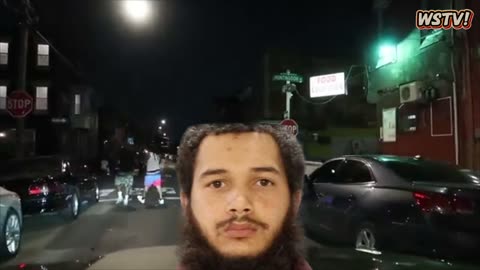
Yo, word on the streets of Philadelphia is the underworld don't just run on cash and bodies, it runs on contracts too. Steven Williams, just 25 years deep, was standing accused of being exactly that, a professional hitter who squeezed triggers on command. Prosecutors came at him hard, charging him with four contract bodies across Philly, claiming dude wasn't moving off impulse or feelings, nah, he was moving off a paycheck. Police snatched him up June 2020. He ain't even try to act like he ain't hear the streets talking.
According to what was floating around at the time, Williams admitted he knew about the murders, but he was saying something else was going on. That he was getting set up to be the fall guy, the patsy, the name that gets thrown out there so the real money stays in the shadows untouched. Out in them blocks, he wasn't Steven Williams, he was Scheezy, or depending on who was running their mouth, White Boy. West Oak Lane molded him. He claimed 6,900 O Guys, that corner affiliation meant everything in hoods where your reputation is your bread and your block is your banner.
Philadelphia got its heavyweights, the ones stacking paper from the drug game and using it to play chess with people's lives. According to the law, that's the world Williams allegedly was grinding in. The theory wasn't random bloodshed, it was structured, bankrolled, a business operation where the heavyweights drop the bread, the shooter handles the problem, no prints on the kingpin, just dead silence. There's allegations that between May 2018 and September 2019, Williams took contracts worth thousands to wipe out four dudes, not one, not two, four bodies. Each one ended the exact same way, bullets.
All four victims got shot to death. Three of them were either posted up inside parked whips or climbing out when rounds shredded through the quiet. No action movie chase sequences, no long drawn out beefs, just cold calculated moments when the target was sitting still, exposed, and seconds away from whatever they thought their next day would bring. That's how the story got laid out in them court documents, methodical, business-like. Authorities painted a picture of a young cat allegedly moving as a gun for hire in a city where money screams louder than loyalty ever could.
Williams though, he maintained that the whole narrative wasn't that cut and dry. He told police he knew about the bodies, but according to reports, he claimed other people were positioning him to catch the weight. Whether he was a pawn or a paid assassin, them charges were crushing. In a city that's witnessed its fair share of murder for hire whispers, the name Stephen Stainman Williams hit different. 25 years old, standing dead in the center of four alleged contracts that prosecutors say turned into funerals. Philadelphia's heavyweights, the contracts, the parked cars, the silence that followed, that's the framework the authorities constructed.
And in June 2020, the alleged contract killer from West Oak Lane found himself no longer moving in the shadows of 6,900 O Guys. He was standing in the glare of a courtroom with four murders stamped to his name and a whole city watching to see if he was the triggerman or the scapegoat. June 12, 2020. The gavel finally swung. District Attorney Larry Krasner stepped up to the podium and broke it down ice cold.
Stephen Williams, known in the trenches as Stainman, was now staring at a mountain of charges, murder, conspiracy, hindering apprehension, possessing an instrument of crime, reckless endangerment, tampering with evidence, obstruction of justice, and a whole pile of weapons counts connected to the burners. This wasn't framed as some random block drama. Krasner made it crystal at the press conference. After what he called a complex homicide investigation, his office was pushing forward against a man prosecutors described as collecting thousands as a contract killer. According to the DA, what he labeled a streak of violent crimes stretching over more than two years was finished.
Williams wasn't grabbed off some corner that day. He was already locked down in a Pennsylvania state prison on unrelated charges when the city tied his name to four homicides. The connection, Krasner said, came through the murder weapons. In this life, debts move quick and when money is owed, it don't stay friendly. Two neighborhoods, two separate crews, people connected to a supplier.
According to accounts surrounding the case, one cat was allegedly playing both ends, setting people up. Make him meet you here, make him meet you there. And that's how targets get lined up because somebody they trust puts them in the right spot at the wrong moment. Authorities alleged that Stainman was aligned with a cat named Hammer. Prosecutors would later tell the jury that Williams was part of that crew, knocking people off without second thoughts.
At trial, the state said they would demonstrate how he was connected to each of the four killings. They started with September 8th, 2018, 9 o'clock in the morning, the 1900 block of Harteil Avenue. William Crawford caught two to the head and back, two more in the torso. He was pronounced at the hospital. Six 40 caliber shell casings were scattered at the scene.
The alleged motive, murder for hire. A witness told police he was driving through the area when he spotted a skinny, light-skinned black dude in a faded hoodie walk up behind Crawford. Seconds later, gunfire ripped through the morning air. The victim collapsed. Soon after detectives got word from the streets, the shooter was known as White Boy.
They were handed photos pulled from an Instagram page, investigators secured records for the username. Those records showed the account belonged to Stephen Williams. Detectives uncovered conversations and posts that prosecutors said related to the murder. The account also showed that Williams repeatedly posted a specific cell phone number, with a search warrant in hand detectives pulled the call detail records. According to the analysis presented by authorities on the morning of September 8th, 2018, Williams' phone pinged off the tower near his crib.
When it moved, the signal traveled to the area covering the 1900 block of Harteil Avenue, the same block where Crawford got hit. Moments after the gunfire, the phone's signal traced back to the tower near Williams' residence. To prosecutors, the patterns spoke loud. From Instagram messages to cell phone towers, the state built its case brick by brick, painting a picture of contracts, setups, and movement tracked in digital footprints. And with that first killing laid before the jury, the Commonwealth began connecting the rest, arguing that what looked like separate street shootings were part of something colder, more calculated.
A system where money changed hands and men ended up in the dirt. By February 2020, the case started tightening like a noose. Homicide detectives got word from ATF, a ballistics match, two separate murder scenes, two separate bodies, one weapon. The 40 caliber shell casings recovered from the killing of William Crawford matched the casings from the murder of Richard Isley, same gun, same fingerprint in metal. According to authorities, the weapon was a 40 caliber with a specific serial number they were able to trace.
That serial number would circle back around because months earlier, May 7, 2019, police had already cracked open Stephen Williams' phone after arresting him and serving a search warrant. What they pulled out of that device would become a centerpiece in court. Inside the extraction was a photo, a hand gripping a 40 caliber pistol. Authorities said they identified the hand as White Boy's. The gun in the photo, according to them, it carried the same serial number as the murder weapon tied to Crawford and Isley.
And it wasn't just a trophy shot. Prosecutors said the image had been sent to contacts in Williams' phone as part of an attempt to sell the firearm. The same phone was linked to two numbers investigators said he used during the commission of all four homicides, digital footprints, ballistic science, and a weapon allegedly caught in its own spotlight. Then came February 10, 2019, 7,500 block of Forest Avenue. Jermaine Simmons was sitting in a parked car when gunfire erupted.
The 40 caliber shell casings recovered from the killing of William Crawford matched the casings from the murder of Richard Isley, same gun, same fingerprint in metal.
Seven rounds tore into his upper torso and right arm. He was rushed to Albert Einstein Medical Center and pronounced dead. When crime scene techs went to work, they recovered 11 45 caliber fired cartridge casings and 7.9 millimeter casings, two calibers, two guns, a storm of metal. A witness said she was inside on 7,500 Forest when she heard what she thought were firecrackers. She looked out the window and saw a black car.
Someone inside was firing two guns into another vehicle. Then the car sped down Forest Avenue. Moments later she saw the driver's side door of the victim's car swing open. Jermaine Simmons tumbled out, bleeding heavy, hitting the pavement hard. He didn't make it far.
The witness watched as the young man's body went still on the concrete. Another block, another body, another family left wondering why their loved one had to go out like that. Detectives pulled surveillance footage, they worked the streets, and they picked up a name that connected to Stainman's circle. The state alleged Williams was the one squeezing that trigger too. Then March 26, 2019, inside a car on the 1200 block of South 52nd Street.
Marcus Johnson was sitting in the driver's seat when bullets came through the windows. Five rounds, rapid fire, all upper body. Marcus Johnson caught it bad and died right there in that whip. No getaway, no escape, just death in the stillness of a parked car. The witness statements put a figure at the scene matching Williams' description.
Cell phone records again traveled to the area. The ballistics team was already building the connection to the other murders. And then came the fourth one, August 22, 2019, 5400 block of Pemberton Street. Michael Johnson, no relation to Marcus, was standing outside when gunfire ripped through the night. He caught rounds to the head and body, dropped where he stood.
Another victim, another crime scene, another shell casing that would link back to the alleged hitman. Four bodies. Four separate incidents. Four alleged contracts all pointing back to one young man from West Oak Lane. The evidence stack got heavier with each killing.
Instagram posts, cell phone records, ballistics matches, witness testimony all converging on the same conclusion. The prosecution wanted the jury to see a system, not random violence. A business where Williams was the product being sold, the tool being used, the trigger being pulled on command. The defense countered hard. They argued the evidence was circumstantial, that cell phone records don't prove presence, that Instagram pages could be compromised, that witness testimony from street witnesses could be tainted by fear or loyalty to higher powers.
They suggested Williams was indeed the fall guy, that someone higher up in the organization was using him as a shield, letting him take the weight so the real money stayed untouched. But the jury heard different. They heard a narrative that made sense in the context of Philadelphia's streets, where money moved through murder, where young soldiers got paid to handle problems, where the real architects stayed clean while the trigger pullers caught the cases. The jury deliberated. Days passed.
Then the verdict came back. Guilty. Not just once, not twice, but across the board. Four murders. Williams was convicted on all counts.
The system had worked, or had it? See, whether Stephen Stainman Williams was a willing contract killer pulling in thousands for each body, or a young man who got positioned to take heat so the real bosses stayed hidden, the reality remained the same. Another young Black man from Philadelphia's corners went to prison, most likely never coming back out. Another family had to bury their loved one. Another neighborhood had to process another loss.
The conversation didn't end in that courtroom though. It echoed through West Oak Lane, through the blocks where 6,900 O Guys still moved, through communities asking the harder question not about who pulled the trigger, but about the system that made pulling triggers profitable. The legacy of the Stephen Stainman Williams case wasn't just about convicting one man. It was about exposing the infrastructure of contract killing in America's urban centers, the way poverty, desperation, and organized crime created an ecosystem where a 25-year-old kid could be worth more dead than alive to the people running the show. Whether he was the triggerman or the scapegoat, the case revealed the true architecture of violence in Philadelphia, and by extension, in every major city where money still talks in bodies, and contracts still get paid in funerals.
That's the real story. That's the legacy that lingers.