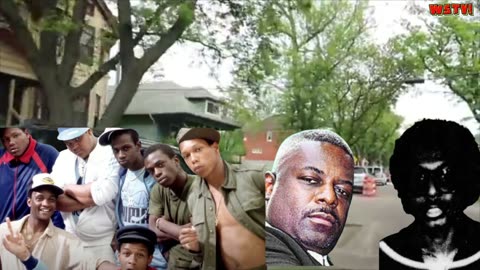
The Sylvester Murray situation hit different right out the gate. This wasn't just another fed case, another name clipped to some paperwork and tossed in a file. Murray was sitting dead center of a sprawling poison pipeline, pushing heroin and coke coast to coast, running lines through the Caribbean and back into American soil. But the real earthquake came from what was operating underneath him. A machine so ice cold, so methodical, it made even veteran prosecutors take a step back. They called it Young Boys Incorporated. YBI wasn't some messy street operation grinding block to block. This was a structured enterprise, militant and intentional, engineered to drown Detroit in dope at a level most crews couldn't even imagine. Heroin flowed straight to the fiend, no middleman, no hesitation. Projects, backstreets, housing towers, the city became a chessboard, and YBI knew every piece on it. The most disturbing part wasn't the quantity, it was who was holding it down. Kids, not teenagers testing the waters, actual shorties, some barely 12 years old, thrown into the most exposed position in the whole conspiracy. These kids weren't calling shots, they weren't sitting at the table, they were runners, disposable pawns, they carried coin envelopes stuffed with heroin and handed death directly to junkies face-to-face day in day out. Public housing towers, Detroit blocks, Highland Park, Pontiac, Flint, wherever the fiends were breathing, those boys got sent, and that was the brilliance of it, the sickness of it, by throwing children on the front line the real architects stayed invisible. While law enforcement chased smoke in stairwells and courtyards the leadership stayed insulated untouched by the pressure. Arrest one kid another filled the slot, the system swallowed losses without blinking. The streets saw kids hustling, the bosses stayed in the cut. This wasn't traditional organized crime with tailored suits and backroom handshakes. This was something nastier, a non-traditional criminal empire built on youth, velocity, and expendability. The leadership understood visibility was danger, so they handed that danger to children who didn't fully grasp the game they were trapped in. The fallout was catastrophic. Heroin flooded into Detroit at a level that fed a massive percentage of the city's addiction. Neighborhoods already struggling got buried deeper. Families watched kids get sucked into a world that aged them overnight. The shorties lined up, coins in hand, while the machine kept purring. When the prosecution finally split it open, it exposed more than a drug conspiracy. It revealed a blueprint, one that showed how far people were willing to go to protect power, profit, and position. YBI wasn't just moving drugs. It was proof of how ruthless organization can become when morality is completely stripped from the equation. Detroit paid the toll. They didn't stumble onto Sylvester Seal Murray by chance. This wasn't luck, and it damn sure wasn't sloppy police work. This was a slow, patient hunt, one constructed brick by brick, wire by wire, face by face, designed to climb past the street-level noise and cut straight into the heart of the operation. Federal and state law enforcement locked arms early, knowing this wasn't a one-batch problem. DEA, IRS, Detroit Police, Michigan State Police, all moving in rhythm, pooling resources, trading intelligence, watching the same shadows from different corners. The target from jump was clear, Sylvester Murray, the man feeding the machine, the supply line keeping Young Boys Inc alive and humming. The first crack came quiet in December 1980. A Michigan State Police Narcotics detective made a small heroin purchase from a street-level player known as Melvin Davenport, who operated under the name Sammy D. Nothing flashy, no big splash, just enough to crack the door. Word filtered back quick, Sammy D wasn't just another runner, Sammy D talked, Sammy D knew things, and more importantly, Sammy D knew Murray. By the spring of 1981, the chessboard shifted. DEA special agent Walter R. Brown stepped into the picture wearing a mask, an Ohio-based dealer looking to move weight. He found Sammy D, pressed the right buttons, spoke the right language, and started slow. The first taste was a cheap one, a $75 sample, small money, but it bought trust. From there, the flow picked up, more buys, more conversations, more faces drifting in and out of the frame. Over the months that followed, Brown stayed deep in character, stacking purchases and absorbing information Sammy D didn't even realize he was giving away. Somewhere in that stretch, the undercover line crossed a major threshold, a brief quiet face-to-face with Murray himself, no drama, no theatrics, just confirmation that the man behind the curtain was very real. By July 1981, Sammy D got loose with the details. He talked money, five to seven thousand a day. He talked storage, heroin tucked away inside the Jeffersonian Apartments in Detroit. He talked history, Murray in the game since childhood, moving narcotics before most kids learned how to shave. Every word tightened the net. Phones started lighting up next, recorded calls, pen registers, toll records, surveillance logs, informants whispering names and patterns, the picture sharpened enough for prosecutors to take the next step. On March 11, 1982, a judge signed off and the wiretaps went live on Sammy D and another associate John Thomas. For 20 straight days, the phones told their story. More than 600 narcotics-related calls poured in, coded language, street logic, money talk, movement talk, the wires exposed the inner workings, especially the tight bond between Murray and John Thomas. No guesswork anymore. The hierarchy was visible. That intelligence pushed the investigation higher. Another court order followed. Another line tapped. This time Murray's home phone in Southfield, the walls were closing in, not with sirens or headlines, but with recorded voices and time stamp truth. By then, the streets still thought the empire was untouchable. Behind the scenes, the clock was already running out. The walls were already closing in, brick by brick, wire by wire. Every phone Murray touched turned poisonous. Every conversation, blood evidence. The voices coming through those lines told too much, said too much, moved too reckless. Investigators stacked the calls on top of the buys, layered them over past deals, and that was enough to unlock another door. This time, the wire ran straight into apartment 241 at the Jeffersonian Apartments in Detroit. On May 18, 1982, the knock didn't come polite. Federal agents kicked the place open and walked into a scene that looked like organized chaos frozen in time. Cash everywhere, not tucked neatly into safes or drawers, but stuffed into garbage bags like trash nobody bothered to take out. Nearly $700,000 in US currency came off that floor. Street money, drug money, heavy money. At the same moment, another door flew open upstairs. Apartment 2706, Darryl Young's unit, same building, same operation, different stash. Agents peeled back layers and found more than $40,000 in cash. Bricks of heroin, stacks of cocaine. One package stood out, almost half a pound of heroin, tested pure to a level most street chemists never even see. The kind of quality that turns entire neighborhoods into customers overnight, experts later broke it down. That single package could be chopped into tens of thousands of individual hits. Enough poison to flood the city again and again. Even as agents bagged evidence, the phones kept ringing. Murray already knew, word traveled faster than sirens ever could. Within an hour Murray was telling a woman close to him that law enforcement wasn't the real concern. The fear sat elsewhere, old enemies, foreign hands, different rules. The paranoia said everything. The investigation didn't stop. The paperwork stayed sealed. The wires kept humming. Agents weren't just chasing money. They were mapping the spine of Young Boys Inc, the structure, the leadership, the arteries that kept the machine alive. On June 16th, 1982, the focus shifted to Milton David Jones, known in the streets as Butch Jones. This was the architect, the organizer, the one who turned chaos into a system. Surveillance tracked Jones moving through the city carrying a satchel into a residence on Tracy Street. No rush, no panic, just another delivery. When agents hit Jones's home with a federal warrant, the truth spilled fast. Jones admitted what was already written between the lines. The satchel held more than 10 bands in narcotics cash. Instructions were simple. Don't count it, just deliver it straight through. Minutes later, another warrant lit up the Tracy Street spot. Inside sat Murray. Calm. Present, surrounded by cash. Over $600,000 was pulled from that location alone.
The net tightened with surgical precision. Between May and June 1982, federal agents executed warrants across the city, dismantling the operation piece by piece. The evidence stacked like dominoes. Phone records proved conspiracy. Surveillance photos proved movement. Cash counts proved scale. Informant testimony proved intent. By the time prosecutors brought charges, the case was airtight. Sylvester Seal Murray faced federal conspiracy counts, narcotics trafficking charges, money laundering allegations. The younger associates went down too. Butch Jones, the architect. Sammy D, the talker who started the crack. John Thomas, the bridge between the street and the supply line. The courtroom proceedings laid bare what the streets had always known but couldn't prove. YBI wasn't some accidental gathering of hustlers. It was engineered from the top down, designed to maximize profit while minimizing exposure. Murray sat at the apex, distant enough to claim plausible deniability, connected enough to control everything. The younger boys, the shorties doing the actual handoffs, they were disposable by design. Collateral damage in a system built on calculated ruthlessness.
When the sentences came down, they were heavy. Murray drew federal time, the kind that eats decades. His associates followed. The streets felt the impact immediately. The supply lines fractured. The machine sputtered. For a moment, the pressure lifted from certain neighborhoods, at least until another operator found the vacuum and moved in to fill it. That was the cycle, that was always the cycle. One empire falls, another rises. One name goes to prison, another takes the throne. The real story wasn't just about catching Sylvester Murray or shutting down Young Boys Inc. It was about what those prosecutions exposed about the machinery of urban drug distribution, the cold calculation required to run a criminal enterprise at scale, and the devastating cost paid by cities and families caught in the wake. Sylvester Seal Murray's legacy wasn't found in courtroom victories or newspaper headlines. It lived in the neighborhoods that were flooded with heroin while he moved unnoticed, in the children who were weaponized by the system he created and never saw the money it generated, in the addicts who became customers of a machine engineered with terrifying precision. Murray's case proved that the most dangerous criminals weren't always the ones making noise on corners. They were the ones staying silent in the shadows, building empires on the backs of the desperate and the young, moving poison at industrial scale while the world looked elsewhere. Detroit remembered. The streets remembered. And those who came after learned the lesson well. The game continued, uglier and colder than before.
Between May and June 1982, federal agents executed warrants across the city, dismantling the operation piece by piece.