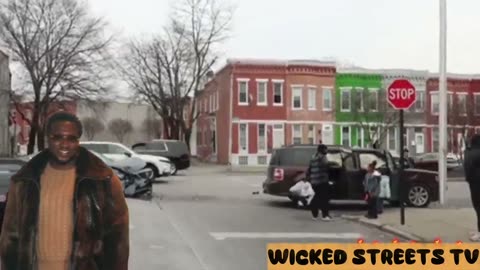
January 2014, Baltimore law enforcement thought they finally knocked out one of the biggest sources of street bloodshed in the city. The logic was basic, chop the head off the serpent and the whole body drops. Maryland assistant US attorney James Warwick was dead convinced they locked down a predator, a cat who didn't just get rich off the drug game but straight up fed the violence that rolled with it. But in a city with a deep history of heavy underworld figures, names like little Melvin Williams, Nathan Boate Barksdale, Anthony and Darnell Jones, and Rudy Williams, there was a fresh name ringing bells, Garnett Gilbert Smith. By the time they slapped them bracelets on him, Smith already had his name stamped in these streets.
The feds dubbed him Mr. Big, a handle that wasn't just about his enormous physical frame but a sign of the empire he constructed. His drug operation wasn't just another corner hustle, it was a multi-million dollar enterprise, one of the most massive Baltimore witnessed in years. Smith wasn't just pushing weight, he was pushing mountains. In less than two years, he was accountable for trafficking over 1000 kilograms of cocaine through the city, his heroin operation flooded every block, and with that level of power came an unavoidable wave of violence.
The streets of Baltimore were already a war zone, but Smith's empire made it even more bloody. Like any city with deep-rooted street game, Baltimore's hustle got its own distinct rhythm, a grind that separates the real players from the ones just trying to survive. And when it comes to understanding the ins and outs of that game, few had the type of authority that Garnett Smith carried. Even from behind bars at FMC Devons in Massachusetts, Smith could still speak on the nature of the streets he once controlled. Baltimore has always been involved in criminal activity as far back as I can remember, he stated.
It's always been a city where you could make money regardless of whatever lane you consider yourself to be in. From my understanding there has always been a string of great men who were in the hustling game that came from Baltimore and have been successful at making millions of dollars. Smith wasn't just reminiscing, he was speaking from experience, he had lived it, breathed it, and built something that put him right alongside the city's most infamous figures. The story of Mr. Big wasn't just another tale of a kingpin rising and falling in Baltimore's underworld, it was another chapter in the city's legacy of hustlers who turned the streets into gold mines, only to find out that every empire, no matter how strong, eventually faces its reckoning.
Garnett Smith was a true son of Baltimore, raised by his mother and grandmother as they moved from one neighborhood to the next. His childhood was spent bouncing between Sandtown Winchester, Park Heights, and Baltimore County, giving him a front row seat to the struggles and survival tactics that shaped the streets. Despite being spoiled as a kid, as he put it, he wasn't shielded from the realities of poverty that gripped the city. From an early age, Smith had the mindset of a hustler. At just 12 years old, he was already getting to the money, performing odd jobs around the neighborhood, mowing lawns, raking leaves, shoveling snow, anything to put some cash in his pocket.
He didn't see it as just chores or pocket change. To him, everything was a hustle, and that meant he had to be great at it. For Smith, the grind wasn't just something he picked up, it was in his DNA. Hustling was second nature, and that mentality would only grow stronger as he got older, setting the stage for the empire he would one day build in the streets of Baltimore. Garnett Smith's journey from a young hustler to a full-fledged street figure started taking shape in middle school.
His early years were marked by ambition but also by a growing taste for trouble. While attending Deer Park Middle School in Randallstown, Baltimore County, his antics caught up with him. He was wild, unfocused, and constantly getting into trouble until it all came to a head. The school had enough and Smith was expelled. That expulsion was a turning point.
Instead of straightening out, he went deeper into the streets. With no father figure or strong male mentor to guide him, Smith ran wild. School no longer seemed like the path for him. The streets became his new classroom, and the lessons he learned were harsh and unforgiving. This reckless phase led him straight into trouble and eventually into prison at a young age.
But despite everything, Smith never completely turned his back on education. In 1987, knowing he only had a seventh grade education, he took it upon himself to get his GED. He saw it as a way to keep his options open, a key that could unlock a future beyond the streets. And for a while, it seemed like he was on that path. By 1993, Smith enrolled at the University of Maryland Eastern Shore, majoring in general studies.
It was a chance to change his trajectory, to do something different. But the lure of the hustle was too strong. As his money started piling up from the streets, balancing college and the game became impossible. School wasn't paying the bills the way the streets were, and before long he made his choice. He left college with 50 credits completed, fully committing himself to the fast life.
That decision came with consequences. The same streets that had made him rich also came with their pitfalls. According to legal documents, Smith spent a total of six years behind bars for felony convictions tied to his illicit dealings. In 1994, he was convicted of possession with intent to distribute cocaine and heroin in Baltimore. A decade later, in 2004, he caught another case, this time for cannabis possession in Harris County, Texas.
Even with time behind bars, Smith never took his foot off the gas. His focus was always on the hustle, and that hustle paid off, putting him in a position most could only dream of. Jail time, nah, that didn't slow him down, it just kept him sharper. As his money stacked up, so did the opportunities. While most people stayed grounded, Smith was out here living a life full of experiences that felt foreign to the average person.
As a kid, he'd seen different states, but once he became an adult with the kind of bread that could move mountains, his travel game was on a whole new level. He wasn't just flying across the country, he was hitting up different states and even jetting out of the country. But the 90s were when things really started to pick up. When he was flying around, it wasn't uncommon for him to pass through LA or New York on the way to his next destination. It was in Los Angeles where Smith would make the connection that would flip the script on his life and put a serious dent in the streets of Baltimore.
In 1994, he was convicted of possession with intent to distribute cocaine and heroin in Baltimore.
He wasn't just passing through LA anymore, he started kicking it heavy in the land of the stars. The vibe was different, the energy was different, and that's what drew him in. California was a whole new world compared to where he came from, and it spoke to him. The city offered opportunities he wasn't going to let slip through his fingers. By 2009, Smith had his eyes set on one thing, that work.
He tapped into a solid source of cocaine in LA and started picking up large quantities of the powder. But even Smith had high standards, he wasn't going to settle for any low-quality product. So in 2010, he stepped his game up and connected with a new plug who had the goods. High quality coke was now his to move, and if you know anything about dealing with weight, you know you got to be smart about how you move it. Law enforcement was always lurking, so Smith had to think outside the box.
He wasn't about to get caught slipping, and he didn't. Drawing inspiration from the old school hustlers, like the ones in Miami from Cocaine Cowboys, Smith masterminded his own creative way to move those packs. He ran a scheme that let him slide the goods across the country without drawing too much heat, keeping his operation running smooth. It wasn't just about moving weight, it was about moving it like a pro. According to the legal docs, Smith linked up with a trucking company that had the perfect setup for him.
They provided car carriers and vehicles with stash spots that didn't scream look here. These rides rolled through interstate highways day and night, blending in with regular traffic, completely under the radar. It was genius, and for a minute, it actually worked. Smith had the plug, he had the distribution, he had the transportation locked down. Everything was clicking.
But here's where the story takes a turn. Federal agents and local law enforcement had been watching closely. They knew something was cooking, they could feel the heat coming off his operation. Smith's network was getting too big, too exposed. He had too many people moving his work, too many hands in the pot.
That's always the problem with empires built on the streets—eventually somebody talks, somebody gets pinched, and the whole thing starts to crumble. In early 2014, everything came crashing down. Federal task forces moved in with a coordinated strike. They hit stash houses, they grabbed major players in his organization, and they shut down his supply lines. When they finally apprehended Garnett Smith, they didn't just get a street-level dealer.
They had taken down one of the most sophisticated drug operations on the East Coast. The feds had receipts too. They traced his money trails, they documented his cocaine shipments, and they built an airtight case against him. Smith was looking at serious federal time. In the courtroom, the prosecution painted a picture of a man who had built an empire on the suffering of others.
Every brick of cocaine that moved through his hands contributed to addiction, overdose, and death. Every dollar he made came from the misery of Baltimore's most vulnerable. Smith didn't fight the inevitable. He knew the game, he understood the rules, and he knew what happened when you got caught. In 2014, he pleaded guilty to federal charges of cocaine trafficking and money laundering.
The sentence was brutal—25 years in federal prison. At FMC Devons in Massachusetts, Smith had plenty of time to reflect on his choices. And that's exactly what he did. From his cell, Smith became vocal about his past, offering insights into how the game works, how young men get caught up in the streets, and what the real cost of that lifestyle is. He didn't make excuses, but he didn't glorify it either.
He was honest about what he'd done and the damage his empire had caused. The legacy of Garnett Gilbert Smith is complicated, and it should be. He was undeniably brilliant—his operation showed tactical thinking and organizational skills that most legitimate businessmen would envy. But those same skills were used to flood Baltimore with narcotics, to fuel violence that claimed innocent lives, and to feed an addiction crisis that devastated families and communities. Smith's story is a cautionary tale about ambition without direction, about the seductive pull of fast money, and about how the streets promise everything but deliver only emptiness.
He rose from nothing to become Mr. Big, but in the end, even the biggest empires crumble. What remains is a man serving decades in federal prison, separated from the city that made him, watching from behind bars as new hustlers make the same mistakes he made. His final word, his final W, isn't a victory—it's a warning. Garnett Smith's legacy is etched into Baltimore's criminal history as one of the most significant drug lords the city ever produced, but also as proof that no empire built on destruction ever truly wins.