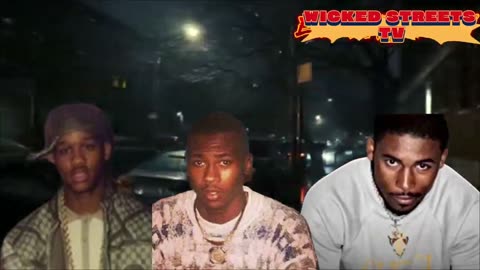
Yo, the OGs be preaching that only the strong survive the jungle, and that ain't just talk, that's straight scripture in these streets. You come through soft, moving like prey, you getting stomped out, chewed up, and left to rot, no question. And guess what? Ain't a soul out here shedding tears for you, no sympathy, no remorse, that's just how the concrete goes. Either you strap up that armor and battle your way through or the streets swallow you whole. That jungle stay cold, stay vicious, and only the strong crawl out, that's the choice you gotta make, be the predator or be the meal.
Now certain cats gonna tell you loyalty don't mean a damn thing in the game, it's all about how ruthless you willing to get, how brave you can be. They say loyalty get you bodied faster than fear ever could. But real talk, even in a world this gritty and grimy, loyalty still carry weight. It don't always keep you breathing, but sometimes it's the only thing keeping you anchored. And that's where this tale begins, the tale of a young soul named Domencio Benson, but the streets baptized him Montana.
Born in 1964, Montana wasn't your average shorty. He had this fire burning inside, this fearless energy that made heads turn. But that fire? It came from pain, real deep pain. See, Montana had five brothers, but he lost one when they was young, a drowning accident that crushed the whole family. And if that wasn't enough trauma, he lost his pops early too, way before a young boy should gotta figure out this world without that kind of guidance. To make matters worse, the neighborhood kids used to roast him heavy, thought he was soft, an easy mark. They pushed him, clowned him, tried to break his spirit, and for a minute, he didn't swing back, he just absorbed it.
But he had somebody holding him down, his uncle Norman, a real one. Norman stepped up like a father figure, always showing love, always got his back. But he wasn't gonna let Montana stay weak. He told him straight, one day you gotta stand on your own, little man, ain't nobody gonna fight your battles forever. That stuck with him deep. Norman might've been his safety blanket, but he wasn't gonna let him live like a victim. And one day something flipped in Montana, all that pain, all that bullying, all them losses he took as a kid, he reversed it. He started pushing back, swinging back, biting back, and he ain't stop since. He learned how to move different, how to read people, how to carry himself like a wolf instead of a sheep. That transformation didn't happen overnight, but when it did, everybody felt it. Montana stopped being that soft-spoken kid and became somebody the block had to respect.
But don't twist it, just because he toughened up don't mean the pain vanished. That trauma stuck with him, he held it close, buried deep. He didn't always show it, but it weighed heavy. His outlet? Music. When the streets got too loud, he turned to the beat, to melodies that calmed the storm inside him. That was his peace.
Montana came into this world at St. Mary's Hospital on Buffalo Ave, right in the heart of Brooklyn. He grew up in Weeksville Gardens, a wild little section that molded him into who he became. He was bad, no question, always in some kind of trouble. But he had people looking out, his Aunt Sharon for example, always played that motherly role, kept him close, gave him that guidance when the world felt like it was turning its back. And even though he was tight with his siblings, the loss of that younger brother, that stayed with him. His day one Claude remembered how much that tragedy broke him inside, you could see it in his eyes. That's when music really became his sanctuary, his therapy.
Growing up, Montana stayed getting clowned in the neighborhood, but he had that charm too, fair-skinned, good-looking, and always caught the attention of the baddest girls on the block. He was the type the ladies loved and the dudes either hated or envied. But even with all that, folks always whispered about how protected he was. His step pops Norman was on guard 24/7, always stepping in, always shielding him from drama. Some of his boys ain't like that, they felt like it made him look soft, like he couldn't stand on his own. And maybe that's what lit the fuse, maybe that's what made Montana double down. Stepping to the streets was something to prove. All that pain, all that doubt from the people around him, it became fuel. By the time he hit his teenage years, Montana wasn't just a kid trying to survive no more, he was turning into a force, a young wolf learning how to move through the jungle with purpose, pain, and power.
Domencio came up during a real pivotal time in Brooklyn's history, back when the streets was flooded with big names and heavy personalities that shaped the whole city's underworld. It was a who's who of legendary street figures: Lou Hobbs, Anthony, One Arm, Monk, Rambo, Frank Nitty, Kendo, ALA, Ross Son, and Hamo, the same Hamo that was accused of letting off the infamous nine shots at 50 Cent, and on top of that was Mike Tyson's right-hand man. That era was no joke, and Domencio held his own among all them giants.
He didn't roll with no slouches either, his circle was filled with dudes who moved with the same hustle-first mentality. One of them was a man named Pop, who also hailed from Weeksville Gardens. Pop was the one who introduced Domencio and a few of his homies to the crack game, and from there they clicked up tight. That partnership with Pop was the spark that lit the fire, it pushed Domencio straight into the heart of the drug trade by the mid-1980s. But unlike a lot of cats who just played the block, Domencio had that ambition, that vision. He leveled up fast, moved like a boss, and before long he wasn't just in the game, he was running it.
His step pops Norman was on guard 24/7, always stepping in, always shielding him from drama.
Domencio climbed up to kingpin status and started rocking with other top-tier hustlers from his section and beyond, dudes like Kendo, ALA, and other known power players who had real weight in the city. His name started ringing out heavy in the streets. And even former drug kingpin Jimmy Henchman, who later caught heat for being tied to the Tupac shooting at Quad Studios in '94, crossed paths with Domencio. And when he did, he saw it plain as day, Domencio was the undisputed king of Flatbush. Streets even gave him a nickname, Montana, like the movie. He moved like that, flashy but focused and respected.
But even kings get tested. Domencio had a serious run-in with one of the most feared stick-up kids of that era, Kelvin "50 Cent" Martin. The clash went down at the Empire Roller Skating Center, a well-known Brooklyn spot where everyone came to show out. Outside the rink, the energy between them turned hostile, and once they got inside, it erupted. Word is 50 tried to rob Domencio, and that's when the fists started flying. A full-on fight broke out, Domencio got the upper hand, dished out a serious beatdown, but not before 50 Cent managed to catch him with a blade and slice his face. The wild part? Domencio didn't even feel it at first, adrenaline had him locked in, tunnel vision. It wasn't until he heard the women around him screaming that he realized he was bleeding. That moment right there became one of those street stories that echoed for years, two legendary figures locked in a raw, bloody moment that showed just how unpredictable the game could get.
They called him Montana for a reason, and not just on some movie character flex. That name held weight, especially around the 1600 block of Montana Avenue, Northeast and Washington DC. That wasn't no nickname thrown around lightly, it meant Domencio was respected, feared, and damn near untouchable. Cats in the streets spoke his name with caution because they knew what came with it. His presence alone shook rooms. He walked with a type of confidence that bordered on dangerous. Ain't too many would look him in the eye, let alone cross him. He talked slick to anybody, anytime, anywhere, straight up fearless.
All up and down the East Coast, through the whole Eastern Seaboard network, Domencio's name rang off heavy in the streets. Hustlers, crooks, killers, they all knew who he was. He was one of them ones, the real deal, the type of legend that don't need no introduction. But like all empires built on concrete and bloodshed, Montana's reign couldn't last forever. The streets got colder, the game got deadlier, and eventually the predator became the prey. By the late '80s and early '90s, federal heat was closing in tight, and the block that once bowed down to Montana started changing. Snitches surfaced, alliances crumbled, and the feds were building their case brick by brick. The inevitable came when it always does in this life, hard and unforgiving, and Montana's story shifted from kingpin to cautionary tale.
When the dust settled and the smoke cleared, Domencio Benson's legacy remained etched into Brooklyn's streets forever. Whether you knew him as Montana the kingpin, Montana the fighter, or Montana the survivor of his own demons, his name became synonymous with a particular era—a time when the streets had kings and those kings had real power. His life was a testament to the cold truth of the game: brilliance and brutality walk hand in hand, trauma breeds toughness, and even the strongest wolves eventually fall. But Domencio Benson didn't just disappear into history; he became a monument to an entire generation of hustlers who believed they could outrun the consequences. Montana's final word to the streets was written in blood, in broken promises, and in the echo of his name that still haunts Brooklyn to this day—a reminder that no amount of money, respect, or fear can save you from the jungle you created. Rest in power, Montana.