# HARVEY "BIG BLACK" CHRISTIAN: THE FALL OF STATEN ISLAND'S MOST FEARED EMPIRE
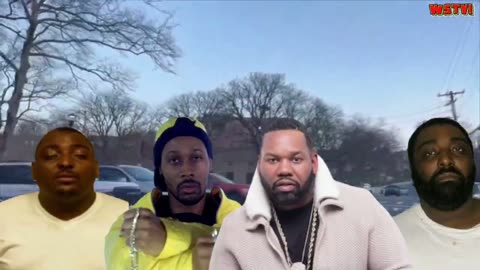
When the gavel came down in 2017, Harvey "Big Black" Christian wasn't just some run-of-the-mill defendant caught up in federal court. Nah, son was the final standing soldier of a Staten Island street regime that had been hemorrhaging for years. The judge hit him with 50 years federal time—a death sentence in slow motion for a cat the government claimed ran a crack empire for two straight decades out of Park Hill projects in Clifton. Twenty years of block pressure, trap spots, workers, watchers, and code of silence—all reduced to a case file and a prison cell assignment. Twelve months before that, the sword had already sliced through the family. His little brother Anthony "Nitty" Christian got handed life without parole—no appeal, no light at the end, just permanent lockdown behind walls and barbed wire. The Christian brothers got tried and found guilty in a 2014 federal prosecution that blew the lid off Staten Island's toughest drug operation. The government painted them as organized, protected, and merciless—a blood-run machine that outlasted power shifts, police crackdowns, and the never-ending rotation of New York's street game. Park Hill wasn't just some housing development back then. It was war territory. Cash circulated quick there, and so did street talk. The whole borough knew who controlled what, even when lips stayed sealed. The Christian name rang bells without needing introductions. You ain't have to spot them to know they were watching. The enterprise operated low-key when necessary, made noise when required, got violent when disrespect surfaced. What elevated this beyond the typical federal takedown, though, was the cultural weight surrounding the situation. The Christian's domain intersected with the birthplace of hip-hop's most legendary crew—the Wu-Tang Clan. Staten Island, Shaolin, Park Hill—these weren't just lyrics in verses, these were actual addresses. Most of Wu-Tang's founding members grew up in or nearby the same territory the Christians dominated. That connection alone was enough to make law enforcement dig deeper. By the late nineties, that interest transformed into full investigation. Federal agents started circling not just the streets, but the music industry's dark corners—the zones where celebrity, paper, and old neighborhood bonds collided. During the summer of 1999, two Wu-Tang founding members, Robert "RZA" Diggs and Corey "Raekwon the Chef" Woods, came under federal microscope. The accusation wasn't lightweight—that revenge murders got authorized after family members got robbed, and that street enforcers connected to the Christian operation got activated to execute payback. Nothing ever materialized into formal charges, no indictments, no trial drama. But the suspicion was thick enough to suffocate a building. Those details stayed buried until years afterward, hidden inside an FBI file focused on Russell "Ol' Dirty Bastard" Jones. When that document got unsealed in 2012, it exposed a hidden narrative the public had only gossiped about—how thin the boundary really was between street authority and rap legend in late nineties New York. ODB, unpredictable genius and living paradox, had already been deceased eight years at that point—overdosed in 2004. But even from the grave, his name still anchored federal documents. By the time the Christians got sentenced, the era they commanded had already vanished. Crack had declined, Park Hill had transformed, and the city had evolved—at least on its face. But the sentences revealed the actual truth: 50 years, life without parole. That ain't correction, that's mathematics. A warning etched in concrete for anyone still dreaming about the long hustle. What survived was reputation—broken, layered, and deadly to discuss. A Staten Island dynasty destroyed piece by piece, a hip-hop mythology permanently stained by classified files and unresolved questions. And two brothers who once ran blocks now reduced to identification numbers, counting decades while the world they once dominated keeps moving without them. The Christian brothers constructed their throne the traditional way—block by block, murder by murder, beneath the towers of Park Hill projects, a concrete labyrinth that had already consumed generations before them. From the early nineties forward, Park Hill wasn't just public housing—it was protected territory governed by terror, currency, and street credibility, and commanding it stood Harvey "Big Black" Christian and his younger brother Anthony "Nitty" Christian, moving with the type of silent power that didn't require announcements or declarations—everybody already understood. Their operation connected straight into the Bloods supply chain extending from Los Angeles, waving red bandanas over Staten Island long before most considered the borough part of New York's street legend. For years their squad operated under the Gangster Killers Bloods flag, a title that carried influence and repercussions. Product distributed, profit accumulated, and Park Hill stayed controlled. If you hustled there, you paid tax. If you resisted, you got eliminated. By the mid-two-thousands, the Christians weren't just neighborhood commanders anymore. They were the foundation. Lieutenants managed corners, soldiers maintained discipline, and outsiders learned not to challenge the boundaries. When the Gangster Killers Bloods chapter concluded in violence with the 2009 assassination of their leader Jermaine "Big'en" Dickerson, the Christians didn't crumble—they adapted. Surviving in that environment meant flexibility. They reorganized under the Valentine Bloods, now commanded by Anthony "N.O." Britt, keeping the operation functioning while the affiliations shifted. But by that point the countdown had already started. Federal surveillance had been monitoring Park Hill for years—wiretaps, snitches, confidential documents stacked deep with names, dates, and intelligence waiting to be converted into indictments. In the summer of 2011, the hammer finally struck. The Christians, plus most of their command structure, got slapped with a massive indictment—racketeering, narcotics distribution, homicide. It was the type of prosecution designed to destroy empires, not just imprison individuals. Nitty Christian got directly connected to bodies in the evidence. Big Black, the older brother and supposed mastermind, wasn't linked to a particular killing, but that was irrelevant. In RICO proceedings, association equals culpability, and command equals responsibility. When the indictments dropped, the loyalty fractured. Anthony "N.O." Britt cooperated—the same soldier who once wore the colors and broke bread with the Christians entered the courtroom as a federal informant, explaining the structure of how Park Hill actually functioned. Three years afterward, during trial, his statements helped destroy an empire. But the Christian narrative couldn't be examined without addressing the music emerging from Staten Island simultaneously. The FBI documentation hinted what the streets had been discussing for years—that the Park Hill narcotics world and the ascending Wu-Tang universe existed in overlapping space. RZA and Raekwon the Chef weren't just recording artists—they were products of identical circumstances. Most of Wu-Tang originated in or around geography that the Christians organization ruled, and law enforcement suspected those connections obscured boundaries that were meant to remain distinct. According to sources, that blurring turned fatal in the summer of 1999. The account the feds constructed was straightforward and brutal. Jerome "Boo Boo" Estella, only 17 and recently released from youth detention, allegedly robbed RZA's younger brother of a diamond-encrusted chain, operating under the influence or command of Corey "Shank-Bunk" Brooker, a competing Bloods figure challenging Park Hill's power structure. Around that same period, Brooker himself supposedly robbed Raekwon's cousin of cash and jewelry. The disrespect accumulated rapidly, and in that universe, disrespect doesn't remain unaddressed. The FBI alleged Diggs and Woods utilized their relationships. That information traveled through underground networks and reached the Christians sphere. What happened next was textbook street justice. On July 19, 1999, Estella got murdered inside the Park Hill projects. His homecoming terminated almost immediately after it started. Three days afterward, June 22, Brooker got killed in neighboring Stapleton, shot as he exited his vehicle, caught vulnerable in the most routine moment. Two corpses, one statement. Years afterward, those accusations resurfaced in official documents when an FBI dossier on Ol' Dirty Bastard got released in 2012. ODB, who perished from a drug overdose in 2004, became the unexpected container for information the government had been holding since the nineties. Names, associations, rumors transformed into documented paragraphs—not prosecutions, but permanent marks. By the time the Christians faced trial, the streets they once controlled were already evolving. Park Hill was more peaceful. The red bandanas had disappeared. The empire had imploded, consumed by prosecutions and informants. One brother confronting life imprisonment, the other buried beneath decades of federal time. The machinery that once seemed unstoppable had been dismantled systematically, methodically, permanently.
The legacy of Harvey "Big Black" Christian and Anthony "Nitty" Christian doesn't exist in the streets anymore. It exists in court documents, sealed FBI files, and the cautionary mathematics of federal sentencing—50 years and life, two men erased from the game they once dominated. They built something that seemed eternal, ruled territory that felt unconquerable, commanded respect through fear and force. But empires constructed on violence and narcotics don't last generations—they collapse under the weight of their own contradictions, buried by informants and wiretaps, destroyed by the very system they thought they could operate around. What remains is a fractured history, half-told and dangerous to examine, intersecting with rap mythology and underground legend in ways that will never be fully resolved. The Christians are gone now, counting down decades in federal penitentiaries, their names footnotes in hip-hop history and cautionary tales on Staten Island blocks. Their story isn't one of triumph or redemption—it's one of inevitability, of the long game finally catching up, of streets that never forgive but always remember. Two brothers who thought they were building a dynasty instead built their own prison sentences, brick by brick, body by body, until there was nothing left but numbers, files, and the permanent silence of cells behind concrete walls.
When the gavel came down in 2017, Harvey "Big Black" Christian wasn't just some run-of-the-mill defendant caught up in federal court.