That's how we grow this thing and keep these videos coming for y'all. Every single beat bumping through these videos and shorts is cooked up by yours truly. So if anybody out there checking for the production you hearing on this channel, hit us at evil streets media at gmail.com. That's also for anybody trying to promote their music or business ventures. Slide in my line and we'll link something proper.
We been putting these episodes up on Spotify's podcast platform too. So y'all can just vibe to it on any device whether you driving around or out there on your grind. Link sitting right in the description. I'm also launching a Patreon where I'm gonna be dropping extended content with way more in depth breakdowns so keep your eyes open for that. Also anybody trying to show love and support the channel directly, you can send a dollar or stack a million to our cash app evil streets TV.
Every penny that comes through gets pumped right back into the channel. Make sure you drop a comment if you donate so I can give you a shoutout in the next video. Alright I kept y'all waiting long enough let's dive into this gangster shit. Enjoy the show. New Jersey don't always get its proper respect when people speak on organized crime in America but let's be a hundred.
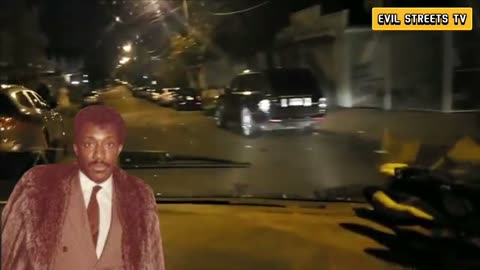
The Garden State always had some serious heavyweights operating under the radar especially when you talking about black organized crime Newark was a major stronghold. And one of the biggest names to ever emerge from that concrete was none other than Wayne Akbar pray. You drop his name in certain circles and heads still nod with respect. He wasn't no loud mouth flashy street cat just trying to blow up. Nah Akbar moved surgical with it disciplined strategic and respected like a five star general.
He commanded a tight operation known as the family a Newark based drug trafficking organization that ran strong for nearly two decades. And this wasn't just some local corner operation pushing small time bags. This was a full scale enterprise pushing major weight from coast to coast. Cocaine and marijuana was their main money makers and when they peaked they had operations stretched across multiple cities state lines and networks. Akbar kept it militant.
Ran it like a corporate hierarchy but enforced with the streets codes. You had couriers stash house guards lieutenants accountants everybody playing their position. The family operated like a precision machine under Akbar's command the organization expanded to roughly 300 members and associates every single one either hand selected or vouched for. Loyalty was deep. This wasn't just about collecting cash.
It was about legacy about power about constructing something built to last. For years he kept his name under wraps his movements quiet and his inner circle tight. That's what made him lethal. He wasn't out here making all the noise but his name still rang through the blocks. But no matter how intelligent or disciplined your movements once the feds got you in their crosshairs it's only a matter of time and in 1989 time ran out.
After years of constructing his empire Akbar got slammed with a federal case that brought everything tumbling down. The government wasn't playing around they labeled him the principal administrator of a major cocaine import and distribution network. The charges they stacked on him were crushing and they made sure the sentence matched. He got life in federal prison no parole no exits. Just like that one of New Jersey's most powerful and calculated crime bosses was erased from the streets.
But even locked behind those walls the story of Wayne Akbar pray still echoes. In Newark in Jersey and beyond his legacy is one that keeps getting studied and whispered about. He was living proof that black organized crime wasn't just real it was calculated powerful and deeply embedded. Akbar wasn't just participating in the game he helped reshape how it got played. And even though the system tried to erase him they couldn't erase the impact he left behind.
Newark police director Claude M. Coleman didn't sugarcoat nothing when he testified at the SCI public hearing about the obstacles his department ran into dealing with Wayne Akbar pray and his drug empire the family. According to Coleman pray had the entire city and beyond on lock for years. He was viewed as one of them so called untouchables. You know the type always spotless on paper never caught holding anything on his person but still pushing weight like a freight train behind the curtain pray was sharp real sharp.
He kept his distance from the actual drugs never allowed himself to get caught with a single brick or even a dime bag. But everybody on the streets and even inside the precinct knew what was really happening. Coleman said it straight up people knew pray was orchestrating major drug operations but they couldn't touch him. Not because they weren't putting in effort but because the man played chess too well. He lived a life filled with flash and influence money status and respect but for the longest there wasn't enough evidence to bring him down.
He was operating like a boss and thinking three steps ahead. Then Coleman went on to break down how pray constructed the family up from nothing using straight fear intimidation and violence. This wasn't no friendly operation. Nah Akbar climbed his way to the top by making sure anybody who tried to compete or step in the way got crushed. Rivals in the drug trade either backed down disappeared or got handled.
He didn't have to raise his voice his name alone carried serious weight in the streets. People knew not to cross him. Then after they finally got him sentenced to life in federal prison without a shot at parole back in 89. The ripple effect of his legacy didn't just disappear overnight. Coleman said the crew kept pushing for a minute but it wasn't the same.
Without Akbar running the ship the family started falling apart. What used to be a tightly controlled organization with order and discipline turned into a scattered mess of former soldiers trying to do their own thing. Coleman called it fragmented. He said some of pray's old lieutenants started freelancing cutting their own deals and chasing their own paper. The unity and control that once made the family so dominant just wasn't there no more.
Some of those lieutenants even ended up getting locked up themselves caught in the fallout from the empire collapsing. Bottom line Coleman painted a vivid picture. Pray had Newark locked for almost two decades running a major drug operation without ever getting his hands dirty. He constructed an empire off of fear and respect and even the cops had to admit he was a difficult one to bring down. But once the feds got him that solid foundation started to crack and it's been scattered ever since.
Then after they finally got him sentenced to life in federal prison without a shot at parole back in 89.
At the commission's public hearing DEA special agent in charge Ashton stepped up and delivered the complete breakdown on one of Jersey's most infamous crime networks the family. He laid it all out past and present and made it clear that this wasn't just a small time crew moving work. Nah this was a full scale African American organized crime outfit founded and commanded by Wayne Akbar Pray and even with him locked up for life since 89 the influence and some of the structure was still breathing out there in the streets. Ashton testified that the family was still operating to that day headquartered right in Essex County New Jersey. According to the DEA this crew still had over 200 members tied in soldiers lieutenants loyalists.
Those who came up under pray's game or were recruited by his network over the years. The operation originally took root back in the early 70s as an outgrowth of the new world of Islam which wasn't just pushing religious doctrine. Ashton made it clear that movement had its hands in criminal activity from the jump backing bank robberies and even establishing what he called a bank robbery school to train people up on how to get that money the illegal way. Wayne Pray adopted the name Akbar a Muslim name that means the great one or all powerful but Pray didn't just use the name he embodied it. Ashton said sometimes he even referred to himself as Akbar Akbar basically calling himself the greatest of the great.
And when you examine how he constructed and ran the family it's not hard to see how he earned that title in the criminal world. He operated like a CEO building a criminal enterprise that was both deep and wide controlling major sections of the drug trade across multiple states. It all started local right in the heart of Essex County but Pray wasn't trying to keep it small. Before long he expanded into Ohio Michigan New York and down into Southern Florida. By the time it reached its peak his organization wasn't just some loose collection of street hustlers it was a full blown network.
Ashton said the DEA had classified at least 12 of Pray's mid level players as Class 1 violators. Now that's serious. To break it down a Class 1 cocaine trafficker is someone who's capable of pushing 50 kilos of coke a month minimum while also overseeing five or more subordinates. That means Pray's people weren't just moving weight. They were managing whole crews distributing drugs like clockwork and making serious bread in the process.
Even though Pray was locked down for life he understood something most criminals never figure out. Building something that lasts means constructing it to survive without you. That's the difference between a hustler and a boss. The family had structure. It had protocols.
It had men sworn to hold it down no matter what. Ashton broke down how pray diversified the operation too. It wasn't just cocaine. They had marijuana operations, numbers running, loan sharking, you name it. They had their hands in multiple revenue streams which is why the organization was so resilient even after pray got knocked.
He had built something institutional something that could operate without his direct involvement. The DEA also noted that pray had serious connections outside Jersey. He had ties to major suppliers down in Miami to distributors up in New York, to connects all over the country. This wasn't some isolated local crew. This was a network that moved with military precision and discipline.
Ashton testified that the family's organizational structure was unlike anything they'd seen in black organized crime at that level. There was a clear chain of command. Reports went up. Orders came down. Money flowed in predictable patterns.
It was organized not in the traditional mob sense but in a way that was actually more efficient and harder to dismantle. When you got multiple smaller cells operating independently but still answering to a central authority you can take out parts of the operation and it keeps breathing. That's why the family lasted nearly two decades at the top. Even after pray got life and couldn't touch the operation from inside the penitentiary the seeds he planted kept growing. Years passed and the family remained a force in Newark and beyond.
New authorities couldn't fully dismantle what pray had created because it was too decentralized too organized and too rooted in the community. People feared it. People respected it. Young cats wanted to be part of it. That's the mark of a true criminal enterprise one that transcends any single person and becomes something bigger than themselves.
But here's what the government finally understood. You could lock up pray. You could lock up his lieutenants. You could flip some of his soldiers and get them to testify. But the real damage he did was psychological.
He changed how black organized crime operated in Newark. He showed a generation of street cats that you could build an empire without being flashy without being loud without getting your picture in the papers. He proved that intelligence discipline and respect could generate more money and more power than any amount of violence or noise. And that lesson spread. Other crews studied how pray did it.
They adopted his model. They built their own organizations based on the blueprint he created. The family wasn't just a drug trafficking organization it was a blueprint for how to do criminal enterprise in the modern era. Looking at the legacy of Wayne Akbar Pray you see a man who fundamentally altered the landscape of Newark and black organized crime in America. He wasn't the flashiest.
He wasn't the loudest. He never made the headlines like some street legends do. But anybody who knows the real history knows his name carries weight. He took the discipline of the Nation of Islam merged it with street mentality and created something unprecedented. A criminal organization run with corporate structure and military enforcement.
He proved that black organized crime could operate on a scale and with a sophistication that rivaled traditional organized crime families. Even from behind bars for life Akbar's legacy lives on. The family may have fragmented but the model he created never died. Young hustlers in Newark still study his moves. Street scholars still break down his tactics.
He showed the world that you don't need to be loud to be feared and you don't need to be visible to be powerful. Wayne Akbar Pray was a criminal genius and whether you respect the streets or not you gotta respect the way he moved. His story is a permanent part of Newark's history a permanent part of black organized crime history. He was calculated. He was ruthless.
He was brilliant. And even though the system locked him away forever they could never lock away his impact. That's the real legacy of Wayne Akbar Pray a man who built an empire that outlasted him and changed the game forever.