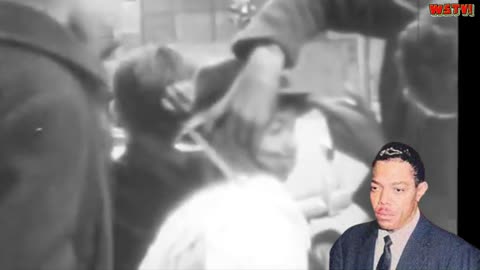
Yo, before Harlem turned into some postcard spot where tourists be snapping flicks, these blocks answered to a whole different breed of royalty. Picture a red-haired cyclone moving through them boulevards with the stillness of somebody who already knew every soul around him was shook. Dillard Morrison Sr., the city tagged him Red Dillard, like that government already came wrapped in threat. To them alphabet boys, he wasn't just another corner hustler. Word around was he might be the most treacherous cat walking on American concrete. In their universe, that stamp ain't handed out. You gotta earn that through bloodshed, staying mute, and building the kind of reputation that got agents clutching their pieces a little tighter. Red constructed his empire brick by crimson brick, extracting millions from Harlem's underworld veins way before MCs flipped drug narratives into sixteen bars. Harlem was the jewel in the crown and he navigated it like somebody who memorized every shortcut, every passageway, every dark spot that currency flowed through. If bread was getting made north of one hundred tenth, he either sanctioned it, possessed it, or planted anybody who tried denying him his tribute. He wasn't the type you tested. Enforcer wasn't just some label, it was in his DNA. He managed extortion the way Wall Street handles corporate takeovers, except his negotiations concluded with somebody stretched out or hobbling back home, rethinking their whole occupation. And when tension escalated, Red didn't dodge the drama. He exchanged gunfire with cats as legendary as Bumpy Johnson, converting Harlem intersections into combat zones where folklore got etched under street lamps. But Harlem stays complex like that. A man could be pure terror to his opposition and a guardian saint to his neighborhood. Red executed that double identity seamlessly. People in the community narrated tales about him like he was some hood Robin Hood, a cat who'd lay hands on the devil by midday and bless a family with a meal by nightfall. Youngsters came up hearing his government the way other hoods discussed folklore champions. Except their champion pushed product, kept females on his hip and glided through the nightlife with musicians and hustlers all treating him like he was the headliner. His existence was a rotation of criminal activity, females and the brand of Harlem elegance only the OGs can still paint. Hazy lounges, live ensembles, gambling dens thick with pressure and Red maneuvering through all of it like the metropolis reported to him. And even though he burned damn near half his existence locked behind steel barriers, decades consumed by prison illumination and cement, the apparatus could never stamp him with the one thing everybody swore he committed. Bodies fell, speculation traveled, rivals disappeared, but no jury ever branded him with homicide. Nah, he always exited that courtroom untouched, like brutality just slid right off his jacket, the way rounds once seemed to slide off his mythology. Red Dillard didn't just exist in Harlem, he haunted it, he dominated it, and even after he departed the physical the name kept circulating, a phantom, a fable, a caution whispered on the same corners he once traveled like they belonged to him exclusively. Early existence, the construction of a Harlem crisis. They claim some shorties get molded by the pavement, but Red Dillard, he emerged from the starting line already programmed for conflict. Born down in Alabama back in 1919, he wasn't no docile country youth. As a little man, he was the one confronting cats twice his measurements, flattening bullies like it was routine, that rage, that fearlessness, that was the initial signal the blocks weren't receiving just another profile, they were receiving a tempest. Nobody ever forgot how he acquired the name Red. One afternoon he attempted slicking his mane to appear polished, figured he'd emerge smooth. Instead, the chemicals backfired and ignited his whole dome a wild reddish brown. The elder dudes cackled, but the tag persisted. And when you earn a street name in the jungle, it transforms into part of your chronicle, whether you appreciate it or not. By 1937, Red made that leap north. Alabama to South Carolina, then straight to Harlem, trailing the path his moms established years prior. He descended off that bus anticipating the metropolis to feel like promise. Instead it smacked him like truth, packed tenements, frigid strangers, and labor jobs that distributed pennies. He wasn't impressed, he was aggravated, and aggravation in a youngin like Red don't disappear, it cultivates. He connected quick with a squad of young hustlers, cats who already understood the shortcuts the city presented if you weren't terrified to seize them. He absorbed fast. Harlem wasn't constructed on labor and integrity, it was constructed on maneuvers, perspectives, and recognizing who to acknowledge when you entered a space. When their bankrolls were thin, they drifted to that Seventh Avenue tavern. One of those neighborhood centers where the authentic power paraded in. The tavern was a showcase of Harlem's underworld nobility. The gamblers, the stick-up specialists, the smooth-talking pimps, the shoplifting monarchs, the dope distributors. Red observed them like a pupil studying royalty. He wasn't fantasizing of becoming them, he was calculating how to eclipse them, and as he started operating with the local boys, something became evident fast. Red wasn't constructed to follow. He possessed that aura you can't instruct. Magnetism blended with danger, command blended with assurance. The category of presence that made elder men examine him and question how soon he'd be pursuing their position. Had existence pushed him another trajectory, perhaps he would've been a CEO or somebody with a corner suite and a gold emblem. But Harlem don't distribute clean selections. Red discovered the lane that fed him the quickest, and once he entered that universe, he started ascending with a velocity that made people acknowledge. Harlem didn't recognize it yet, but one of its most feared figures was already forming. Right there in the back sections of a tavern, absorbing the science like a sponge and anticipating his own opportunity to seize the platform.
Once Red Dillard calculated that scraping surfaces and transporting crates wasn't his destiny, he slid straight into the segment of Harlem most folks murmured about but never ventured into. And he didn't tiptoe. He demolished the entrance. Late 1930s Harlem was a playground for the audacious, and Red arrived like a storm determined to inscribe his signature across the skyline. He initiated small, but small didn't remain in his vocabulary long. First it was robbing the dice participants, the ones congregated around heated tables assuming luck was protection. Then he started hitting numbers runners, Harlem's unofficial financiers, the men who assumed they were too connected to be violated. Red violated everybody and rapidly. His ascent was insane. One day he executes a job at Woolworth's, cracks the establishment, secures the bag, then examines the currency and decides it ain't sufficient. So what does he do? Exits the entrance and immediately sticks up a check cashing establishment like it was an errand he neglected to complete. That was Red, impulsive, fearless, hungry. But the blocks didn't fear him because he hustled. They feared him because he'd traverse hell unfazed. One ambush demonstrated it. Two dudes emerged from hiding and released shots hitting him in the leg. Most men collapsed, most men crawled. Red rotated around and sprinted after them, hemorrhaging, hobbling, cursing, pursuing them all the way back to their getaway vehicle like a demon refusing to clock out. Intelligence travels fast in Harlem. That narrative traveled faster. Amusing thing was he didn't dress like chaos. Always clean, quiet, reserved. The category of man you'd walk past without noticing. But everyone who mattered knew the reality. Red wasn't somebody you crossed. He was a walking caution label. His reputation transported him into the orbit of Harlem's authentic chess participants. Females like May, the monarch of the brothels, the one who maintained a small militia of shoplifters feeding her empire. And men like Big Joe Richards, the phantom who controlled the whole seaboard's black rackets without ever needing to elevate his voice. Big Joe didn't need to be famous. He needed to be obeyed. And he was. Big Joe operated his universe like a war apparatus. Everybody possessed a role. Everybody got examined and nobody asked questions. When he extended his hand to Red, presenting him the position of right hand man, it wasn't just a promotion. It was a transmission to the entire underworld. This young Alabama born enforcer wasn't just another hitter. He was ascending toward the throne.
But Red's rise arrived with collateral damage. April 29, 1940, he caught his first arrest, third degree assault. They dragged him before the magistrate expecting him to crumble like most young brothers did when that courthouse air hit their lungs. Instead Red stood there unmoved, expression flat as concrete, and walked out with a suspended sentence like the judge himself was shook by the magnitude radiating from this cat. That arrest was merely a prologue. The next years became a chronicle of charges, indictments, trials where Red moved through the system like he was playing a different game entirely. Robbery. Assault with intent. Stolen property. Grand larceny. Each charge another badge on his legend, each courtroom appearance another confirmation that the machinery was hunting him and the machinery kept missing.
The 1940s saw Red consolidating power alongside Big Joe, and together they constructed something unprecedented in Harlem's underworld architecture. Numbers operations, protection rackets, stolen merchandise distribution, bootlegging operations that spread across five boroughs. Red was the enforcer, the one who collected the failures to comply, the one who made sure respect flowed like currency through every vein of the operation. Stories multiplied about his methods. Men who questioned Big Joe's authority found themselves visited by Red at three in the morning. Men who skimmed from the numbers got educated on the cost of betrayal. But it wasn't crude like that. Red understood psychology. He'd break your leg and then personally deliver your family groceries for a month, reminding you exactly who controlled your existence and what mercy looked like when it came from a man holding all the ammunition.
The warfare with Bumpy Johnson's crew became legendary. These weren't sanitized conflicts, these were battles for territorial dominion where the stakes were measured in corpses and terror. Red engaged Bumpy's soldiers with the ferocity of somebody convinced he couldn't be murdered. Shootouts erupted on Amsterdam Avenue. Stabbings happened in social clubs where the music still played while bodies bled on the dance floor. Bumpy Johnson himself recognized Red as a genuine threat, the kind of cat who'd rather die standing than live kneeling. Their conflict shaped Harlem's underworld hierarchy for an entire generation. By the late 1940s, Red Dillard wasn't just another hustler operating in Harlem. He was infrastructure. Politicians knew him. Police captains made arrangements with him. Club owners paid him monthly tributes disguised as security consulting fees. He had females across the city, children scattered in neighborhoods where his name alone guaranteed their safety. He wore tailored suits that cost what working men earned in months. His cars were pristine machines that announced his arrival before you saw him. Red was living the mythology he'd constructed, except the mythology was documented in newspaper headlines and federal surveillance records.
Then came the serious heat. The feds initiated Operation Red Dillard, a coordinated investigation designed to finally pin the murders everybody knew he committed but nobody could prove. They subpoenaed witnesses. Witnesses died. They found informants. Informants disappeared. Witnesses recanted testimony with convenient amnesia. The system understood the message Red transmitted through blood and silence. You could testify against him, or you could keep your family intact. Nobody seemed willing to make that calculation work in the government's favor.
In 1952, they attempted a major prosecution. Multiple robbery charges, conspiracy counts, enough paper to theoretically keep him incarcerated for decades. The trial lasted three months. Red sat in that courtroom with the demeanor of a man attending his own coronation rather than his own crucifixion. The jury deliberated for six days. They returned a not guilty verdict on all counts. Red walked from that courthouse and half of Harlem erupted in celebration. The other half trembled, recognizing that the system had basically certified what the streets already knew. This man was untouchable.
His power trajectory accelerated through the 1950s and early 1960s. He expanded operations into narcotics distribution right when heroin was flooding the city like a plague. Red didn't partake in the product he distributed, that was wisdom. But he profited astronomically from the desperation of thousands of addicts. His organization became one of the most sophisticated drug networks operating in the Northeast. Authorities estimated his annual income at somewhere between two and four million dollars, which in 1960s currency translated to god-tier wealth. He maintained connections with suppliers in Turkey, with distributors in every major American city, with corrupt officials at every governmental level.
Yet Red also maintained that dual existence that made him impossible to categorize. He'd finance community centers where kids got safe space away from the streets. He'd personally visit families facing eviction and leave envelopes of cash that saved their homes. He became a silent partner in restaurants and legitimate businesses, laundering his criminal proceeds while simultaneously employing hundreds of legitimate workers. He funded scholarships for intelligent youth whose families couldn't afford tuition. Harlem's poor knew him as a benefactor. Law enforcement knew him as the most dangerous criminal in the region. Both assessments were simultaneously accurate.
But every dynasty contains the seeds of its own destruction. By the mid-1960s, the narcotics market was becoming increasingly volatile. New organizations were emerging, hungry cats from the outer boroughs who didn't respect the old hierarchies. The Black Panthers were organizing communities politically. Federal drug enforcement was intensifying exponentially. The entire ecosystem that Red had mastered was transforming into something he couldn't completely control through reputation and violence alone.
In 1968, he caught a narcotics conspiracy charge that actually stuck. The federal prosecutors had constructed their case meticulously, piecing together intercepted communications, surveillance footage, and a network of informants they'd protected effectively enough that none of them died before trial. Red faced significant time. The legendary status that had protected him in state courts provided less insulation in federal jurisdiction. In 1970, he was convicted and sentenced to fifteen years in federal prison.
Red was incarcerated at Lewisburg Federal Penitentiary, one of the most dangerous institutions in the system. Theoretically, incarceration should have diminished his power. Instead, Red maintained command of his organization from inside the penitentiary walls. Visitors carried his instructions. Correspondence was coded but clear. His presence in the prison population earned respect instantly. Even behind bars, he was Red Dillard, the man whose reputation had achieved mythological dimensions.
He served twelve years before being released in 1982, a man in his sixties emerging into a Harlem that had been transformed by three decades of urban decay. The crack epidemic was still years away but the heroin market he'd once dominated had shifted into new hands. Many of his old associates had died, been imprisoned, or moved into legitimate enterprises. Red was effectively a dinosaur, a fossil from an earlier era of organized crime when individual charisma and ruthlessness could still construct empires. The era of corporate-structured drug organizations had rendered his particular skill set obsolete.
In 1970, he was convicted and sentenced to fifteen years in federal prison.
His final years were spent in relative obscurity, still commanding respect from surviving associates but no longer wielding the operational power that had once made him untouchable. He operated with a low profile, understanding that his legendary status had transformed him into exactly what the system wanted him to be. Historical. Past tense. A cautionary tale.
Red Dillard Morrison died in 1992, seventy-three years old, his heart giving out the way hearts do when they've spent seventy-three years carrying the weight of empires constructed on violence and violation. His funeral was quiet, a deliberate contrast to the spectacle his life had represented. No parades of mourners. No public displays of power. Just an old man's remains being returned to earth.
The legacy Red Dillard left behind remains impossible to cleanly categorize. He was a criminal of sophisticated proportions, a man who trafficked in human suffering through narcotics distribution and extortion. He was responsible for deaths that were never officially attributed to him, for trauma that reverberated through families and neighborhoods. He was the embodiment of predatory capitalism dressed up in tailored suits and charitable gestures. Yet simultaneously, he represented a particular moment in American urban history when individual operators could still achieve notoriety through force of will alone. He was the last of a breed, the final iteration of the independent Harlem hustler operating before the drug trade became systematized and professionalized beyond recognition. His name remains synonymous with a specific era, a specific place, a specific kind of threat that no longer exists in quite the same form. Harlem remembers Red Dillard not as a hero or a villain but as inevitability—the man the streets produced when they required a man like that. His life was a cautionary tale about ambition unchecked by morality, power unrestrained by conscience, and the price communities pay when individuals like Red Dillard decide the world belongs to them exclusively. He haunted Harlem in life and his ghost still walks those same corners where he once held dominion, a reminder that some legends are built in blood and never fully wash out.