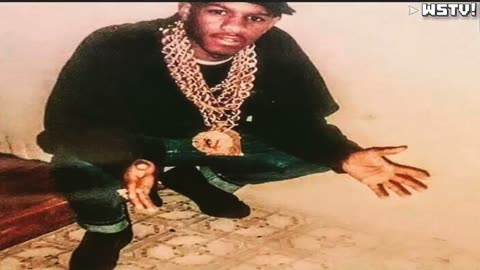
Yo, what's the word, streets family? We sliding back through with another one. And this ain't no fairy tale, nah. This that grimy Brooklyn chronicle, the type of saga that kicks off on the pavement, echoes through the culture, and wraps up in courthouses and burial grounds. Today we touching down in Fort Greene, Murder Avenue, Walt Whitman projects, crack epidemic Brooklyn when the concrete felt like a combat zone and your name carried more weight than any paper credentials. We discussing a title that thundered through the 80s and 90s, a title dropped in rhyme verses, a title connected to rumors, payback, correctional facilities, and death. Killer Ben. Now before we dive in, grasp this. On Wicked Streets TV, we ain't celebrating the madness. We chronicling it. We dissecting the layers, the decisions, the aftermath, the chain reactions because every pavement legend carries a price tag. And majority of the time that tab gets settled in blood. So lean back, tune in, and focus up. This one got hip hop connections, playground gunshots, retaliation loops, and a detective controversy that rattled Brooklyn years down the line. This is beyond just a title. This is Brooklyn in the 80s and 90s. Let's break it down. We back in Brooklyn with it. Fort Greene, Murder Avenue, Walt Whitman projects. You ever catch a name and you can sense the time period? Like it arrives with a soundtrack of police sirens, block debates, and OGs shaking their heads like you needed to witness it. That's what this is. So check it. Benjamin O'Garro, born fall of 1968, Brooklyn, New York City, raised on Murder. Murder Avenue and Murder ain't just some address. It's an atmosphere. It's one of them strips where you can post up in the identical location and witness two separate realities depending on the time frame. But we discussing the 80s. And if you understand anything about 80s New York, you already know the climate. This wasn't polished Fort Greene with the coffee spots and the pet walkers. This was crack epidemic Brooklyn, battlefield energy. Identical type of intensity you catch in South Central LA. Or how cats discuss Chicago's West Side or how Philly was operating in the 90s. Same blueprint, different borough, just different vocabulary. As a young cat, O'Garro established his reputation as a robbery specialist. That was an actual lane back then. Not a performer, not a promoter, not some businessman with an inspirational caption, a robbery specialist. Back when jacking hustlers was its own twisted type of credentials and your standing traveled quicker than the subway. By the mid 80s, he's connected with Fort Greene's Paid in Full Crew, founded by Eric B and Rakim. Yeah, that Eric B and Rakim. The type of titles that sound like heritage lessons if you came up proper. And the crew also had Rap, Supreme Magnetic, and the original 50 Cent. And nah, it wasn't just musical vibes and recording sessions. It was hustlers and jackers unified under that Fort Greene pride. Like we gonna lock down the territory and secure paper. The way crews in every major metropolis claim they're safeguarding the neighborhood while the neighborhood is ducking bullets. By then, he's recognized as Killer Ben. And that title, it resonated. Not because it appeared good on the advertisement because it carried that don't test them energy. The type of title that makes cats whisper and finish sentences like, yeah, you know him. In the 80s and locations like Fort Greene, a title like that wasn't marketing. It was a danger sign. And the reason it struck different is because it's attached to a particular location and a particular time period. Murder Avenue, Fort Greene, Walt Whitman projects. That whole stretch where the pavement was speaking louder than the politicians. And everybody had a motive for moving how they moved. Terror, hunger, pride, survival, whatever. Select one. It all registers. So when you catch Killer Ben, you gotta comprehend what that signified in that moment. In the crack epidemic neighborhood, standings wasn't constructed on screenshots and podcasts. They was constructed on what cats witnessed, what cats heard, what cats survived, and what cats didn't survive. And what makes this saga even wilder is how it sits right on the boundary between pavement and culture. Because you got this cat in the identical orbit as legends, Eric B. But the lane he's in isn't performance stardom. It's the opposite side of the ecosystem. The side that don't receive trophies. The side that receives whispers. So yeah, Benjamin O'Garro grows up Murder Avenue, transforms into a robbery specialist, connects with Paid in Full. And in that mixture, he becomes Killer Ben, a title that resonates in Fort Greene like a siren you don't disregard. That's the foundation. That's chapter one. And it's already shadowy because you can detect from the jump, this ain't the type of existence that concludes with retirement and a gold timepiece. The title resonated because it needed to. In that era, the block was the publication and terror was the headline. OGs from the 80s and 90s, they don't discuss Ben like he was just some regular cat from the block. Nah, they recall him different. They'll recline, narrow their eyes a bit and state, when Ben was outside, cats were shook. And they not stating that for theatrics, they stating it like a truth. From the 80s into the 90s, they claim he allegedly robbed performers, snatched jewelry, executed wild moves for years. And that's how you recognize you're dealing with pavement legend territory. Because legends in the pavement don't receive press conferences. They don't receive documentaries while they breathing. They receive whispers. They receive stories that travel from stoop to stoop, barbershop to barbershop, correctional tier to correctional tier. You catch enough of them stories and you start recognizing something. When a man's title alone makes cats adjust how they navigate, that's authority, twisted authority, but authority. Identical way certain titles resonated in South Central in the 80s. Identical way certain cats in DC had the whole city nervous. Identical way Chicago had figures that existed more in speculation than in legal paperwork. Brooklyn had its own version and Ben was one of them titles. But here's where it gets interesting. His title ain't just attached to the corners. It's attached to hip hop heritage too. Rakim. One of the gods of this rap thing. It more delagged him. On What's on Your Mind? Rakim states, next stop was mine. I was a familiar scene. I was meeting my friend Killer Ben in Fort Greene. That ain't coded. That's title drop. That's direct. And he's up on the Don't Sweat the Technique album cover. That's forever stamped in the hip hop heritage. You can't delete that. Then Tragedy Khadafi shouts him out. Bidded with Killer Ben in the real 50 men. And the book Queens Reigns Supreme mentions him too. There's two different generations of hip hop. Two different lanes. Identical title floating through both. And in the correctional system. Old school NYC lifers. Recall him clear. Jail got a long memory. Titles echo off them concrete walls different. But mainstream memory. That fades. Cats recall Alpo. Rich Porter. A few others. They become documentaries. High casts. Halloween costumes. Ben's title. It drifted into that. If you know, you know category. And that's how it goes sometimes. Pavement don't do Hall of Fame ceremonies. They do funerals. And silence. Then arrives 1995. Now if you was around or even just studied the culture. You already know about the infamous Source Awards. That night wasn't just about trophies. It was tension in the tuxedo. Suge and Snoop throwing shots at New York. OutKast asking the city if it got love for the South. Biggie stepping on that stage. Repping Brooklyn heavy. That room. Thick. You could slice the tension with a butter knife. It felt like one of the moments where everybody smiling. But gripping something under the table. According to a confidential informant. There was a robbery at those awards that never got reported to authorities. A cat named Zack connected the Biggie and the Bad Boy camp allegedly had his gold chain stolen. No press release. No official statement. Just whispers. Word on the pavement claimed. Killer Ben had something to do with it. Now whether that was pride, opportunity, impulse, the pavement don't hand you footnotes. They hand you fallout. Because not long after that, the energy shifts. Ben's back on Murder Avenue. His own stomping grounds. The identical strip he grew up on. The identical pavement that constructed his title. And he standing at a pay phone. Nothing hiding. Not ducking just there. And that's when the bullet arrived. 1995. Spring. Fort Greene. Murder Avenue living up to its name. A single shot. Ben drops. And just like that, the legend got cancelled. The title that carried weight. The name that made cats shook. The pavement prophet that existed in speculation and whispers. He gone. Back to the concrete. No documentary deal pending. No book advance waiting. No podcast six-part series coming soon. Just death on Murder Avenue. The identical spot that made him. The identical pavement that constructed him. And here's the twist that got Brooklyn heated for years. The official report. It was initially ruled something different. Then questions started arriving. Old heads talking about inconsistencies. Detectives and their stories not matching up. A cat named Michael Dowd. A cop with serious controversy attached to his name. Connected to that investigation. Dowd was later exposed. Corrupt. Drug dealing with drug dealers. Taking bribes. The type of detective that made folks question everything he touched. And Ben's case. It sat there. No conviction. No closure. Just confusion and silence. And that's the detective scandal that rattled Brooklyn because folks wondered. What really happened that day? Was it retaliation? Was it a setup? Was justice even possible when the system itself was compromised? Nobody got charged. Nobody got sentenced. The case got cold. And Killer Ben. He just became another name. Another statistic. Another chapter that don't get finished.
But here's what remains undeniable. Killer Ben's legacy ain't measured in trophies or accolades. It's measured in the way his name still carries weight in certain circles. In the way OGs still reference him when they discussing pavement authority. In the way his title got woven into hip hop history through Rakim's verses and album covers that can't be deleted. In the way his death remained controversial enough that detectives' corruption got exposed years later because folks wouldn't let it die quiet. Killer Ben represented something real about 80s and 90s Brooklyn. A time when reputations was built on the streets, when a name alone could shift energy in a room, when the line between hip hop culture and pavement reality was thin as paper. He existed in that space where legends live. Not in textbooks. Not in awards ceremonies. But in the collective memory of a city. In stories passed down. In whispered recollections. In questions that still ain't got answers. His legacy is complicated. Dark. He hurt people. He robbed. He participated in that ecosystem of violence that destroyed neighborhoods. But his story is also a mirror. A reflection of systemic failure. Of detective corruption. Of a city eating itself. Of young Black men in poverty with limited options moving how survival demanded they move. Killer Ben's legacy ain't about glorification. It's about documentation. It's about understanding that every pavement legend carries consequences that ripple through generations. It's about recognizing that the system that condemned him was itself corrupt. That the streets that made him also killed him. That his name will echo in Fort Greene, in hip hop history, and in the unsolved questions of Brooklyn justice for as long as folks remember the 80s and 90s. That's the real legacy. That's what remains.