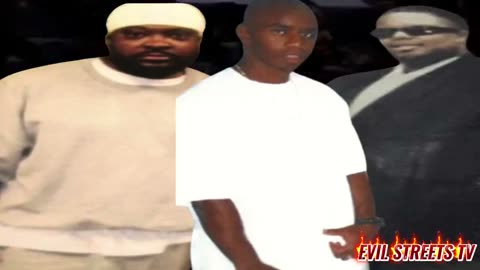
Yo, the streets don't play, you don't play with the streets, nah mean, the streets is everything. Back in the crack era, the 1980s into the early 1990s, Harlem was where hustlers was getting stupid rich off that work while bodies was dropping left and right over territory. Right in the thick of all this madness was the 142nd Street Lynch Mob, a vicious crew that had the blocks around West 140th Street and Lennox Avenue on smash, running shit with pure muscle. Their run, alongside other legendary names in the game like Richard Porter, Alpo Martinez, Kevin Childs, and the Preacher Crew, left a permanent scar on Harlem's story, forever tying the hood to the crack cocaine epidemic and all the blood that came with it. This era was a wild and dark chapter in black history, straight up. For the first time ever, young black dudes was stacking millions on inner city corners, all fueled by the insane demand for crack cocaine. But that paper came with a body count that was unthinkable. To guard their bread and lock down their turf, crews like the Lynch Mob got down with savage violence, spraying semi-automatic weapons in broad daylight, not giving a damn about innocent people catching strays. Harlem, a neighborhood with deep cultural roots, turned into a straight up war zone, with dozens of drug crews claiming little pieces of the area's 3.3 square miles. The constant gunplay and bloodshed had people comparing it to the Wild West, where ain't no rules. By 1990, things got so out of control that local and federal law enforcement launched the FBI C-11 Violent Drug Task Force, an elite squad made up of NYPD detectives, FBI agents, and federal officers whose job was to tear down Harlem's violent drug operations. This unit went after the heavy hitters who had turned Harlem into a battlefield, targeting names like Porter, Martinez, Childs, and the Preacher Crew. The federal government's use of the RICO Act during the crack era completely changed the game when it came to dismantling violent drug crews. By zeroing in on the collective actions of an enterprise instead of individual crimes, prosecutors only needed to prove that a suspect was down with an organization that was responsible for committing crimes like murder. With this strategy, a conspiracy to commit murder carried a life sentence without parole, giving law enforcement serious leverage to hit the top dogs of these organizations. The FBI C-11 Violent Drug Task Force, specifically put together to combat New York City's escalating drug violence, played a crucial role in the government's campaign. The task force used a systematic approach, going after the lower ranks of crews to identify and keep tabs on all known associates. Every time a crew member got knocked, no matter what the charge was, C-11 was immediately alerted, allowing them to connect the dots and build a bigger case against the organization. This non-stop strategy was designed to take down crews from the bottom up, guaranteeing the eventual capture of their leadership. Among C-11's targets was the 142nd Street Lynch Mob, a crew known for its five-year reign of terror in Central Harlem. Operating mainly around Lennox Avenue and 142nd Street, the Lynch Mob controlled the local drug trade through ruthless violence. Any challenges to their authority got met with swift and often deadly payback. Their acts of intimidation and murder turned the neighborhood into a living hell, with residents living under constant fear of getting hit. The inner workings of this notorious crew, led by Charles Leon Brown and key members like Anthony Pope, Vincent Van Smith, Derek Razor, Edward Jabb Funches, Ralph Black Wallace, and Clifford Randall, have now been exposed through a combination of government documents, court transcripts, and statements from cooperating witnesses. These sources paint a chilling picture of the Lynch Mob's structure, operations, and the reign of terror they unleashed on Harlem. At Evil Streets TV we got exclusive, never before reported insights into the Lynch Mob's operations, offering a firsthand look into one of Harlem's most infamous drug organizations. This account sheds light on how an organization thrived in an era when crack cocaine fueled both unimaginable wealth and unprecedented violence. In the late 1980s, Charles Leon Brown and Ralph Black Wallace linked up in Harlem, carving out a major piece of the drug trade in the 142nd Street and Lennox Avenue area. Starting as partners buying cocaine together, they transitioned into the crack game by cooking the powder into crack cocaine. After splitting their product, they sold it in separate locations within the same neighborhood, quickly establishing their dominance in the area. One rose to lead what would later become the 142nd Street Lynch Mob, orchestrating the crew's narcotics operations with precision. His leadership was backed by Wallace and Chris Beatty, who handled the crew's day-to-day operations and managed the drug spots. Wallace oversaw a network of spots where crack was sold in green-topped vials, a signature identifier for their product, while Chris Beatty's brother Dwayne ran locations selling crack in red-topped vials. This strategic branding allowed the Lynch Mob to maintain control over their territory and product recognition. Darren Ceeley played a critical role behind the scenes, managing the packaging and distribution of the narcotics. His work ensured a steady supply chain from preparation to street-level sales, keeping the operation running efficiently. In 1988, the 142nd Street Lynch Mob expanded its influence when Ralph Black Wallace introduced his man, Lewis Homicide Lou Griffin, to Charles Leon Brown. Recognizing Griffin's connections and reputation, Brown began supplying him with cocaine, establishing a mutually beneficial relationship. Griffin brought more than just buying power to the table. He also provided muscle, which became a key factor in the crew's rise. Griffin bolstered the Lynch Mob's strength by recruiting several of his associates, including Ferris Phillips, Clifford Hotdog Randall, John John John Johnson, Derek Bootney Razor, and Edward Jabb Funches. These dudes weren't just enforcers. Many were already running their own drug spots, but their decision to align under the Lynch Mob banner brought cohesion to their operations. They shared suppliers, pooled resources, and united against common enemies in Harlem's highly competitive drug trade. C-11's investigation into the 142nd Street Lynch Mob began in 1988, as they identified the crew's lucrative cocaine and crack operation. However, it wasn't until October 27, 1994, that significant arrests were made. Charles Leon Brown, the crew's leader, Chris Beatty, and a female member of the organization were arrested and charged with five counts of various narcotics offenses. Meanwhile, Darren Ceeley, another key member, managed to evade capture. Following his arrest, Brown wasted no time attempting to save himself. Just two weeks later, he initiated talks with the government about a potential cooperation agreement. Between November 10, 1994, and January 10, 1995, Brown attended 13 proffer sessions during which he laid out the inner workings of the 142nd Street Lynch Mob in excruciating detail. These sessions revealed the crew's organizational structure, their narcotics trafficking operations, and a chilling catalog of crimes, including homicides. Brown disclosed details about multiple murders tied to the crew, illustrating their willingness to use violence to maintain control over their territory. Murder for hires. The Lynch Mob didn't just handle internal disputes, they contracted killings for others as well. Robberies. Countless armed robberies were committed to fund the crew's operations and maintain dominance. Charles Leon Brown became a key government asset in dismantling the 142nd Street Lynch Mob. In 1995, he testified five times before the grand jury on January 30, February 1, March 8, and April 3, offering extensive details about the gang's criminal activities. His cooperation directly led to the arrest and indictment of 10 members of the Lynch Mob and helped authorities solve more than 30 unsolved homicides. Brown's collaboration didn't stop there. On January 5, 1995, Brown and a female associate played a pivotal role in the capture of Darren Ceeley, a fugitive crew member. Under federal officers' guidance, the female accomplice lured Ceeley to a mall in New Jersey by pretending she had a message from Brown. When Ceeley arrived, he was swiftly apprehended. Brown's detailed accounts also resulted in a superseding indictment, adding Louis Homicide Lou Griffin and Vincent Van Smith to the list of indicted Lynch Mob members. Both Griffin and Smith, already held at New York's Metropolitan Correctional Center on felony weapon possession charges from an August 24, 1994, incident, were formally re-arrested in their jail cells, tightening the noose around the Lynch Mob's hierarchy.
In January 1995, a writ of habeas corpus was issued for Anthony Pope, a notorious freelancer who had worked closely with the Lynch Mob. Pope's arrest marked another crucial step in dismantling the crew's operations. The government's systematic takedown continued relentlessly, with each arrest and indictment adding pressure on the remaining members still on the streets. The coordination between federal and local law enforcement proved devastating to the Lynch Mob's infrastructure. By mid-1995, the crew that had once terrorized Harlem's streets was crumbling from the inside out. The trials that followed were brutal expositions of the Lynch Mob's criminal enterprise. Witnesses testified about drive-by shootings, execution-style murders, and the constant intimidation that gripped the neighborhood. The evidence presented painted a portrait of an organization willing to kill anyone who stood in their way, whether rival dealers or innocent bystanders caught in the crossfire. Ralph Black Wallace, once a powerful figure in the drug trade, faced serious federal charges alongside his former partners. Chris Beatty, Edward Jabb Funches, Derek Bootney Razor, Clifford Hotdog Randall, and others found themselves staring at lengthy prison sentences. The organization that had once seemed invincible, that controlled blocks with military precision, was now nothing but a historical footnote in Harlem's tragic past.
As convictions mounted and prison sentences were handed down, the legacy of the 142nd Street Lynch Mob became a cautionary tale etched into Harlem's collective memory. The crew's five-year reign had left behind countless broken families, murdered loved ones, and a neighborhood scarred by violence. But their downfall also represented something powerful—it showed that no criminal enterprise, no matter how ruthless or seemingly untouchable, could evade justice forever. The success of C-11 and the cooperation of Charles Leon Brown demonstrated that the grip of organized crime could be broken through persistence, strategy, and the willingness to flip on your own crew. The Lynch Mob's legacy isn't one of power or respect in the streets; it's a stark reminder of what the crack epidemic did to Black communities, how it turned young men into killers and drug kingpins, and how the consequences of that era continue to reverberate through Harlem to this day. Their story is a testament to both the darkness of that era and the strength of law enforcement in reclaiming neighborhoods from the grip of violence. The Lynch Mob rose and fell, but their impact on Harlem's history—and on the lives they destroyed—will never be forgotten.
In January 1995, a writ of habeas corpus was issued for Anthony Pope, a notorious freelancer who had worked closely with the Lynch Mob.