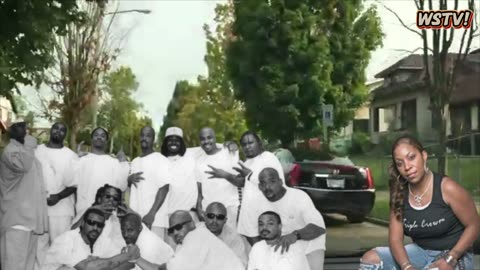
# REWRITTEN SCRIPT
Out in Columbus, Ohio, there was this tight circle of young soldiers who handled they business the way the OGs showed them. Wasn't no flash, wasn't no noise, just rooted. They moved like originals, carrying that street code that don't bend for shit and damn sure don't break for nobody. This wasn't chaos—nah, this was structure. The type of structure that come from growing up watching how things got handled before everything got sloppy. They kept it old school 'cause that's all they knew. The government spun it one way. The feds pushed out the story that the Short North Posse was a menace, a pack of predators terrorizing they own soil. They slapped labels on 'em and painted the Short North like a war zone run wild. An area sitting dead next to Ohio State University suddenly became a headline, a whole spectacle. But the streets? The streets told a different version. The Posse wasn't there to terrorize nothing. They was there to hold the line. They believed in keeping they neighborhood clean from outsiders who came sniffing around with big money and bigger mouths. No corporate drug lords, no roaming dealers trying to plant flags where they ain't belong. That was the line in the sand. They fought wars not for headlines, but to keep the blocks sucker free. That mindset came straight from the generations before them—the Columbus City gangsters who laid that blueprint down years earlier. They moved with a sense of honor and integrity that don't get mentioned in indictments. Gunplay when it came to it, hearted all times, fierce when tested, loyal by default. Everything they did was for the Short North. And they wore that proudly. Four fingers in the air, letting it be known who they stood for and where they was from. Their street reputation was maxed out and their neighborhood was stamped. That's when the spotlight hit. With they name ringing and they presence undeniable, the feds kicked the door in hard. They blew the whole spot wide open and dropped the largest case Ohio had ever seen. Forty-six defendants, over two hundred and ten counts. The kind of numbers meant to bury not just people, but a whole legacy. Overnight, the story exploded. Media frenzies, the courtroom drama—the Short North Posse became a headline instead of a neighborhood force. But legends don't just live in paperwork. What kept this story breathing over the years wasn't just the case. It was what came after. One of the main cooperators on that indictment ain't fade into obscurity. Instead, another Columbus name rose up from the wreckage. Vicky Stringer, a hometown figure who went on to build a brand as a street lit author under Triple Crown Publications. While the Posse took they time and kept it moving, doing football numbers in the federal system, someone else cashed in on the moment. Fame and fortune followed, built on the ashes of that case. The success came loud, public, celebrated—but underneath it all was the unspoken truth. It was the Posse's downfall that marked that rise. They blood, they years, they loss became the foundation for someone else's ascent. The streets remember who paid the price and who walked away winning. And now, after all the noise, all the silence, and all the years that passed, it's time to tell it straight. No spin, no government script, just the record. Late Bear.
Back in the era when reputations was earned with scars and silence, there was a crew on Columbus's North Side that ain't need to announce themselves. They presence alone told the story. Late eighties into the early nineties, while the city slept uneasy, they was wide awake, regulating they blocks with an iron understanding of how things was supposed to go. The streets knew them as the Short North Posse, and over time that name stopped being just a label and turned into a warning. They wasn't chasing fame—they was chasing order. In they world, the neighborhood wasn't just a place, it was a responsibility. Anybody reckless enough to step into that space trying to hustle without permission learned real fast that geography mattered. Outsiders who tested the line ain't get lectures. They got handled. Beatings. Robberies. Sometimes worse. That's how the code was enforced. The pressure never stopped. Customers from Detroit, Indiana, anywhere with wheels and ambition tried to slide in and carve out a piece. Every attempt turned into a street war. Corners became battlegrounds and the result was always the same—invaders pushed back, chased off, sent home bruised, broken, or not at all. The message stayed consistent. This wasn't open territory. One incident burned itself into neighborhood memory. Mid-eighties, Fourth and Eighth, dead center of the Short. A cat known as Detroit Dre thought he could plant himself there and operate loud, doing the kind of foul business people whispered about but ain't survive long enough to repeat. What happened next shut the whole conversation down. The scene was so vicious, so soaked in violence that the spot never reopened. Blood everywhere. Scene stained. A full stop. That moment locked the mentality in place. No outsiders ever. The Short was sealed. Inside those boundaries, rules wasn't suggestions. They was law. Everybody knew the area. Locals just called it the Short. From First Avenue to Eleventh, right north of downtown, Ohio State's campus sitting right in the middle of the madness. A hood wrapped around academia—pressure and privilege side by side. Columbus was massive, hundreds of square miles, nearly a million people, but the Short was tight, compressed, dense with history. And that history was gangster to the core. The streets had been active long before the Posse ever took shape. Since the sixties, the area stayed lit. Corners that made national lists for being the toughest in America. Years before had already laid the groundwork—the Snap Dragons, the original flag carriers, names that rang heavy, men who did real time, federal time, RICO time, twenty-five-year stretches that turned boys into legends. That lineage mattered. The Posse wasn't inventing nothing. They was continuing it. What governed the Short wasn't chaos. It was principal. A hard sense of pride, of knowing who you was and where you stood. Some stepped back from the club scene when it got too reckless, choosing bars and quiet corners over dance floors where somebody died every weekend over nothing. This wasn't about showing out. It was about standing on something. If work had to be done, it wasn't gonna be over ego or games. The danger was constant. Guns was part of the uniform. Police response was slow if it came at all. Prostitution lined the streets. Crack smoke hung in the air. Row houses pressed tight together. Secrets bleeding through thin walls. Fourth Street was the spine. Fourth and Eighth the heart. The Eighth Avenue Lounge sat there like a magnet for killers and cutthroats. A little store up on Fourth and Eleventh marked the edge where people gathered by payphones, cars idling, watching everything. And still, the ones born there loved it fiercely. The hood wasn't just defended. It was glorified. Saying its name meant something. Four fingers in the air every time. That salute wasn't random. It was Fourth Street. It was SNP. It was identity. The mentality was simple and unforgiving. Respect was taken, not requested. Money mattered, but respect mattered more. Stand-up behavior was currency. This was survival. Some took decades rather than speak. That was the example passed down—bosses showing younger bosses how to bite the bullet without folding. The Short North Posse ain't ask for permission and they ain't tolerate intrusion. Anyone thinking they could set up shop learned the rule the hard way. Trespassing wasn't debated. It was answered. Shot on sight. By the time the city and the suits put names to it, the streets already knew what it was.
Long before headlines and indictments, there was a tight pocket of Columbus where rules was enforced by presence, reputation, and consequence. In that stretch of the Short North directly brushing up against the Ohio State University zone, control wasn't debated. It was imposed. The Columbus Dispatch would later frame it as a gang born in 1989, organized to dominate the local crack trade by shutting the door on anyone who ain't belong to the neighborhood. From the outside looking in, they called it terror. From inside the blocks, it was regulation. Forty-two blocks became a closed circuit, guarded by young cats who ain't flinch, ain't fold, and ain't tolerate outsiders breathing where they hadn't grown up. For nearly six years, that area moved on the Posse's timing. Residents knew where the lines was. Outsiders learned fast. Respect wasn't requested. It was assumed. Disdain was automatic. When it came to territory, the Short North Posse ain't negotiate, and they ain't compromise. The power flowed through every corner, every block, every alley. Young soldiers with old-school mentalities making sure the hood stayed locked down tight. This was business conducted the way it always had been conducted on Columbus soil—with force, with finality, and with zero tolerance for stepping out of line.
The feds pushed out the story that the Short North Posse was a menace, a pack of predators terrorizing they own soil.
Then came the knock on the door that changed everything. Federal agents, warrants in hand, ready to dismantle what had taken years to build. The investigation had been running deep, surveillance stacked on surveillance, informants whispering in the dark, the whole machine grinding away until they had enough to move. When they moved, they moved heavy. The indictment came down like a sledgehammer, splitting the foundation wide open. Forty-six bodies charged. Two hundred and ten counts stacked like ammunition. The largest organized crime case Ohio had ever seen. Years of street dominance erased in courtrooms, cells, and federal time. The Posse scattered. Some fought. Some folded. Some cooperated when the weight got too heavy and the years started adding up. The neighborhood went quiet. The regulating stopped. The order collapsed. Fourth Street's spine got broken. And the Short North never stood the same way again.
But the true legacy of the Short North Posse wasn't written in conviction records or newspaper headlines. It was written in the streets, in the memories of those who lived through it, and in the hard lessons about power, loyalty, and the cost of holding ground. They represented something deeper than just drug distribution or street violence. They were the last generation to move with a code that didn't bend for profit or fame. They defended turf because it was theirs. They stood on principle because that's what the generations before them had demanded. They paid the price—decades in prison, lives interrupted, families fractured—while others cashed in on their downfall and built empires on the ashes of their conviction. The Short North Posse's legacy is complicated, unvarnished, and entirely their own. Four fingers in the air, forever. They came up in an era when a hood was something you bled for, not something you exploited for book deals and celebrity. They held that line until the line couldn't hold anymore. And when it broke, they did their time without breaking themselves. That's the mark they left on Columbus. Not a gang remembered for headlines, but soldiers remembered by the streets for standing on something when standing meant everything. That's a legacy that won't fade, no matter how many years pass or how many other names try to claim that same ground. The Short North Posse proved one thing that matters: some names carry weight because they were earned in blood, defended with honor, and paid for in time. Everything else is just noise.