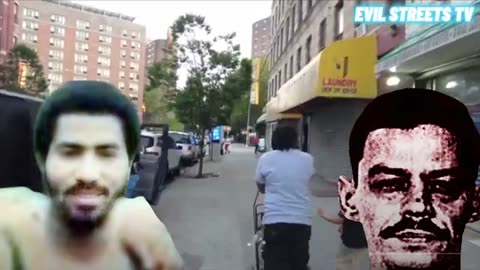
That's what keeps the channel growing and lets me keep bringing y'all these stories. Every single beat you hear bumping through these videos and shorts, that's all produced by yours truly. So if anybody's interested in any of the production you hear on this channel, hit us up at evil streets media at gmail dot com. That goes for anybody trying to promote their music or business too. Slide in my DMs and we can cook something up real quick. We started uploading these episodes to Spotify podcasts too, so anybody can just sit back and listen on any device while you driving or out here trapping. Link's in the description. I'm also starting up a Patreon where I'll be dropping extended videos with way more thorough deep dives, so keep your eyes open for that. And for anybody looking to just support the channel in general, you can send a dollar or a million dollars to our cash app, Evil Streets TV. Every single cent that gets donated goes right back into the channel. Make sure to drop a comment if you do, so I can shout you out on the next video. Alright, I kept y'all waiting long enough, let's get into this gangster shit. Enjoy the show. You probably heard all types of stories about drug crews, how they locked down their corners, pushed weight, and made their name ring out in the streets. But not too many stories get told about the ones who got rich just off being the landlords of the game, straight taxing dealers for moving product on their turf. This is the story of two ruthless gangsters and their crews who had the South Bronx on lock and ran the drug trade like a business empire, one built off fear, blood, and bodies. Their reign over the neighborhood was just as violent as it was profitable. George Nelson Calderon Jr. came into this world on June 12th, 1956, in Carolina, Puerto Rico. This cat's life wasn't sweet from the jump. His moms dipped on his pops when George was still just a little man. She packed up him and his two siblings and brought them to the concrete jungle, New York City. They landed in the South Bronx, in a small furnished room on East 137th Street in the heart of Mott Haven, an area thick with Puerto Rican families trying to make it in a city that didn't offer much. But by the early 60s, Mott Haven was already falling apart. Projects started going up all over, bringing in waves of broke, struggling folks. The neighborhood turned fast into a poverty-stricken war zone full of dope, stick-ups, and broken dreams. Anna got on welfare to try and hold it down, eventually remarried and had more mouths to feed. But George, George took to the streets like he was born for it. He was deep in the game before he even hit his teens. He started small, pickpocketing, running scams, whatever he could do to get a dollar. His sister said that by the time he was 10, some older cats had already introduced him to heroin. His 12-year-old brother Frankie started using too. When their stepdad found out, he beat both of them with a belt until they were bleeding. That ass whooping scared Frankie straight. But George? Nah, he just got colder. George barely went to school. The streets was his classroom. He was out here hitting freight trains in the rail yards, stealing whatever loot he could find and flipping it for cash. His stepfather tried different ways to keep him off the block, even hid his sneakers to stop him from going outside. But George was wild. He'd step out barefoot just to chase a dollar. And he'd come back with pockets full of cash. Eventually, the family stopped asking where the money came from. They knew it wasn't legal. But at the end of the day, that money was helping keep the lights on and food on the table. And in a neighborhood like Mott Haven, sometimes survival came before morals. By 14, George was already knee-deep in the streets, caught boosting jewelry just to cop some dope. And by 15, he was full-blown strung out on that dog food. Eventually, he tried to flip the script and switched over to coke. But that only led to him getting tossed around a bunch of drug treatment spots. Still, the streets kept calling. George Calderon stayed locked in with a wild young Puerto Rican cat named George Gomez. A few years younger, but already making noise in the hood. Their families were tight, so they'd been around each other since young. Even as a shorty, Gomez had a rep in the neighborhood. Once they linked up for real, it was on. They were out there sticking folks up, running up in cribs, doing whatever it took to get fast cash. But in 1973, the grind got paused. Calderon got bagged. Word on the street is he was caught driving a whip with a whole body in the trunk. Whether or not that's true, he ended up getting hit with burglary and robbery charges and was sentenced to a six to 18-year bid. Meanwhile, the South Bronx in the 70s, that joint was falling apart. Crime and gangs were everywhere. Mott Haven in particular was looking like a war zone, stacked with projects, barely any legit income coming in, just welfare and struggle. The Diego Beekman Houses had the worst rep out of all of them. Dope everywhere, barely anybody working, just survival mode. While Calderon was locked up at Elmira upstate, his homie Gomez, now known in the streets as Money George, was making moves. He'd go up to visit Calderon, but back in the Bronx, he was rising up. He started leading a crew called The Cypress Boys, which had his brothers in it along with a local young cat named Ishmael. They were out there wilding. Robberies, break-ins, whatever. And the hood started fearing them. When Calderon finally touched down after doing a little over seven years, he linked right back up with Money George and got locked in with The Cypress Boys. By then, under Money's leadership, they had clout and respect in Mott Haven. Calderon and Money George, their bond was tight. Even though Calderon was older, he looked up to Money's game and sharp street instincts. Now going by just Calderon or Cal for short, he jumped right back in the mix, collecting debts, jacking folks, and putting in work as the squad's enforcer. Cal was cold with it, straight savage when it came to violence. And it didn't take long for his name to ring out across Mott Haven. His presence in The Cypress Boys made them even more feared. Now they weren't just a crew. They were a gang of certified problem makers. Calderon's half-brother, Alberto Garcia, better known in the streets as Ezo, was on the come-up as a rapper. Back in 1980, he dropped a single called The Rapping Spree with his group, The Jazzy Three. One of the other members, none other than Busy B, Money George's younger brother, Fonzie. The streets had talent too, and these dudes were trying to make noise on wax. In January of 82, Cal had a son, George Calderon the third. But heartbreak hit quick because by June the next year, the baby passed away. No details ever surfaced on how. But it was a heavy loss that left Cal with pain he rarely spoke on. By this time, The Cypress Boys weren't no little street kids no more. They were in their 20s now, seasoned in the game and certified vets by South Bronx standards. Money George and his squad had Cypress Avenue locked down and were getting it by any means necessary. Armed robberies, extortion, you name it. One of Money George's main hustles was taxing local businesses. Bodegas had to pay up just to stay open on his turf. That was the cost of doing business when the block belonged to him. But the more dirt they did, the more opps they created. Enemies were stacking and somebody out there was ready to even the score. On the morning of September 12th, 1983, Money George was chilling in a car by St. Mark's Park in Mott Haven with his man Ishmael and a shorty named Melinda. Out of nowhere, a gunman ran up with a machine gun and sprayed the whip with bullets. It was a straight-up ambush. Money George and Melinda were gone instantly. Ishmael held on in the hospital for a few days before he passed too.
Cal was devastated. His right hand, his closest partner, the dude who brought him back into the fold, was gone. But Cal didn't mourn for long. He went straight into retaliation mode. The streets had to feel his pain, and somebody was about to bleed for what happened to Money George. Cal moved with purpose now. He started consolidating power, bringing more soldiers under his wing, and taking over the territory that Money George left behind. By 1984, Calderon wasn't just part of The Cypress Boys no more. He was running things. Cal had become the new force in Mott Haven, and his rep was way darker and way more brutal than Money George's ever was. While Money George had been about the business side of things, taxing folks and getting paid, Cal was about straight violence and control through fear. He had bodies dropping on his behalf. Rivals disappeared. Witnesses got silenced. Cal was building an empire on top of corpses, and the whole neighborhood knew not to test him.
Through the mid-80s, Calderon expanded his operation. He wasn't just taxing dealers no more. He was moving weight himself, pushing heroin and coke across the South Bronx. He had lieutenants running different blocks for him, and the money was coming in wild. Calderon bought himself flashy jewelry, nice whips, the whole nine. He was living like a king on the streets of Mott Haven. But with that level of power and that kind of money, federal heat was inevitable. In 1986, the DEA started building a case against Cal and his crew. They had informants, wiretaps, the whole package. The feds knew everything he was doing. But Cal kept moving like he was untouchable. He had cops on his payroll, judges who looked the other way, and enough muscle to make problems disappear. Still, the feds were patient. They were stacking charges, building a stronger case by the day. Cal might have had the streets, but the federal government had deeper pockets and way more power.
On March 15th, 1987, federal agents rolled up on Calderon and arrested him on drug trafficking and racketeering charges. The charge was massive. They hit him with conspiracy, money laundering, murder, everything. Cal was looking at life. His empire crumbled overnight. With him locked up, his crew scattered. Younger dudes started jockeying for position, other crews moved in on his territory. The South Bronx kept spinning, but Calderon's era was over.
By 1984, Calderon wasn't just part of The Cypress Boys no more.
Cal ended up in federal prison where he spent the rest of his life. He died behind bars in 2002 at the age of 46, a fallen king in a concrete cell. His story, like so many others from that era, is a cautionary tale about the streets. The money, the power, the respect—it all comes with a price that most folks ain't willing to pay. George Nelson Calderon Jr. started as a hungry kid from the projects trying to survive, and he ended up becoming one of the most feared drug lords the South Bronx ever saw. But at the end of the day, the streets don't love nobody. They took everything from him—his freedom, his crew, his legacy—and left nothing but a warning for the next generation. Calderon's name might echo through the streets of Mott Haven, but his life serves as a grim reminder that there's no real winning in the game. The only way out is getting out before the system or the streets catch up with you. And for most cats like Cal, that option never comes.